Rome is not just a city — it’s an open letter written over two thousand years ago.
Traveling through the Italian capital is like walking through an open-air museum. Every street, every square and stone carries the weight of great stories and epic battles; every ancient façade seems to watch those who pass by, as if guarding secrets whispered through the centuries.
And to help you savor every detail at a relaxed pace, I’ve prepared a complete 5-day itinerary in Rome, organized by proximity, with a comfortable rhythm, and plenty of Italian charm.
Welcome to your first letter from Rome.
How to Get from Rome’s Airports to the City Center?
Rome has two main airports: Fiumicino (FCO), the largest and busiest, and Ciampino (CIA), preferred by travelers flying with low-cost airlines.
Fiumicino Airport, also known as Leonardo da Vinci, is the main gateway to the Eternal City, located about 30 km from the heart of Rome, while Ciampino Airport (CIA) is about 15 km away. From these airports, there are four practical ways to reach the city: the fast Leonardo Express train, the efficient regional FL1 train, a comfortable shuttle/bus, or the convenience of a taxi.
The Leonardo Express is the fastest and easiest way to reach the heart of Rome. It’s the direct train connecting Fiumicino Airport to the city’s main station, Roma Termini. In just 32 minutes, it takes you straight to the heart of Rome, with no stops, allowing your adventure to begin immediately among centuries-old squares and fountains. The service runs from 6:23 AM to 11:50 PM from the airport to Roma Termini, and from 5:35 AM to 10:35 PM in the opposite direction, with departures every 15 to 30 minutes.
Tickets cost approximately 16 euros per person. If you’re looking for speed, comfort, and hassle-free travel, the Leonardo Express is undoubtedly the best choice. To avoid lines and travel stress-free, we recommend booking your tickets in advance [click here]
If you want to save money without sacrificing comfort, the regional FL1 train is the perfect choice. Although it doesn’t go to Roma Termini, it connects you to strategic stations—ideal if you’re staying in charming neighborhoods like Trastevere, Testaccio, Piramide, and San Lorenzo. The journey takes about 45 minutes, depending on the station, and the train runs from 5:57 AM to 11:27 PM most days, with departures every 15 minutes on weekdays/Saturdays and 30 minutes on Sundays.
Tickets cost approximately 8 euros, offering excellent value for travelers who want to save while moving around the city conveniently. For more information, visit the official website.
For travelers looking to save as much as possible without giving up convenience, shuttles and buses are an excellent choice. Companies like Terravision and SIT Bus Shuttle connect Fiumicino Airport/Ciampino Airport directly to Roma Termini Station, at very affordable prices—a simple and direct gateway to start your Roman adventure. The journey takes between 45 and 60 minutes, depending on traffic.
SIT Bus Shuttle: operates from 7:15 AM to 11:00 PM from Fiumicino to Termini, and from 4:45 AM to 8:30 PM in the opposite direction departing from Via Marsala.
Terravision: on the Fiumicino → Termini route, runs approximately from 5:30 AM to 11:00 PM; on the Ciampino → Termini route, from 7:15 AM to 10:30 PM.
Tickets cost around 6 to 8 euros per trip, making this the cheapest option for travelers focused on economy.
- Fiumicino (FCO): Book your ticket in advance here
- Ciampino (CIA): Book your ticket in advance here
For travelers arriving in Rome late at night, carrying a lot of luggage, or traveling with family, a private transfer offers peace of mind after your flight. A driver will be waiting for you in the arrivals area, ready to take you directly to your hotel door—no detours, no rush, no worries. It’s the most comfortable way to start your Roman journey safely and stress-free. To secure everything in advance, simply book here.
If you arrive late at night or can’t use any of the previous options, official Rome taxis are a reliable solution. Although not the most economical choice, they offer practicality and safety, taking you directly from the airport to your hotel.
When taking a taxi, always choose white vehicles with the official “Comune di Roma” seal. Avoid non-white taxis or drivers picking up passengers outside authorized points—this ensures a smooth and worry-free ride. You can find more information on the official website.
When to Visit Rome?
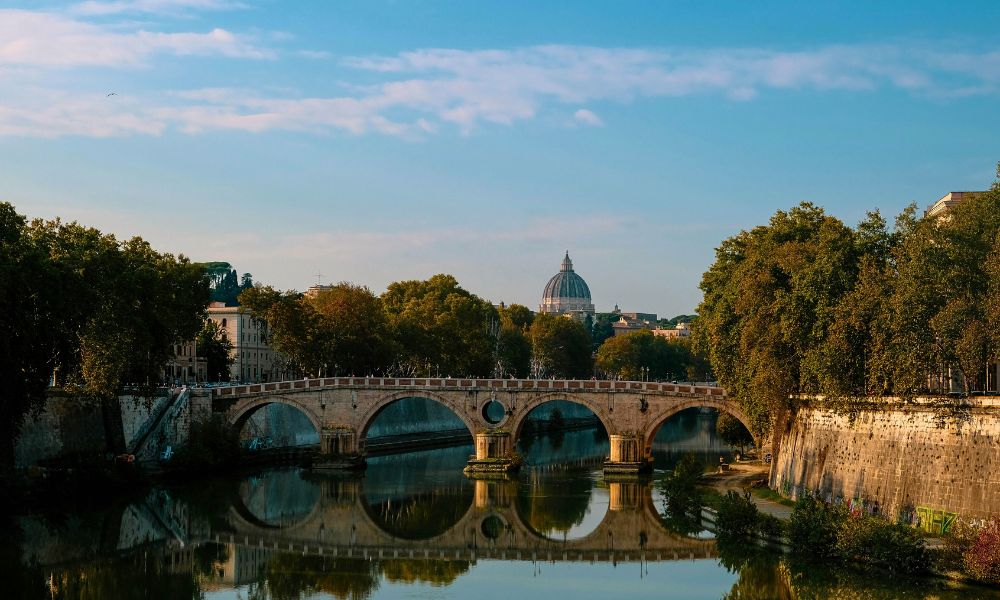
Rome is an incredible city that can be explored at any time of year, but certain seasons make the experience even more magical. We recommend spring (March to May) or autumn (September to November).
In spring, the weather is pleasant, with average temperatures between 12°C and 22°C, and from late March to early April you’ll often find lower prices on hotels and flights, making it easier on the budget. In autumn, with temperatures ranging from 15°C to 25°C in September and gradually cooling into November, the city gains a special charm with its warm colors and soft light.
Summer (June to August) can be intense: temperatures range from 25°C to 35°C, with peaks of 40°C in July and August. For those sensitive to heat, this can be challenging, adding longer museum lines and higher prices. Still, summer offers outdoor cultural events and a vibrant nightlife, making the experience unique.
How Many Days to Spend in Rome?
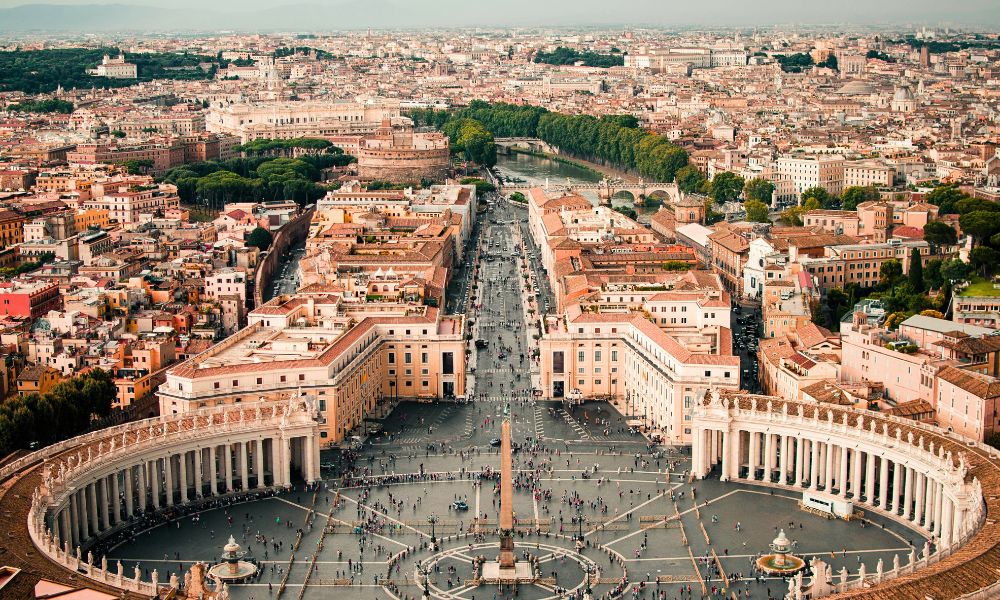
The ideal length of a trip to Rome depends on your pace and how deeply you want to immerse yourself in the city’s history, art, and cuisine.
If you have limited time, the minimum recommended stay is 3 to 4 days—enough to see the classic highlights like the Colosseum, Roman Forum, and Vatican.
But Rome is generous in culture, details, and surprises. If you can extend your trip, staying 5 to 7 days transforms the experience completely: you see more, walk at a relaxed pace, explore charming neighborhoods, and feel the local atmosphere beyond the postcards. That’s when Rome stops being just a destination and starts becoming a memory.
Where to Stay in Rome?
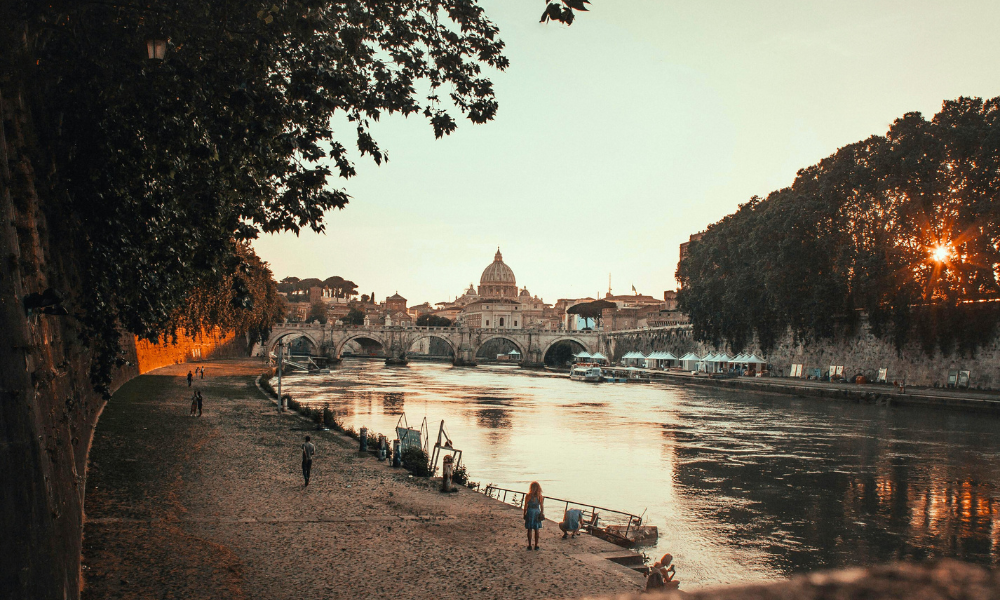
If you’re looking for convenience and want to experience Rome at a more relaxed pace, we recommend staying in the Historic Center, our favorite area. Staying here means saving time and money on transportation while being surrounded by some of the city’s most magical sights: the Pantheon, Piazza Navona, and the Trevi Fountain.
Other charming neighborhoods also deserve attention:
- Rione Monti — bohemian, youthful, and full of charming cafés.
- Prati — elegant, safe, and close to the Vatican.
- Termini — practical and budget-friendly, with excellent transport connections.
- Trastevere — poetic, vibrant, perfect for those who enjoy nightlife.
- Campo Marzio — sophisticated, central, and full of boutiques and historic squares.
We use and recommend booking through Booking.com. The platform is reliable, offers good customer service and, in most cases, allows free cancellation — ideal for those who like to travel with flexibility and peace of mind.
What to Do in Rome in 5 Days?
Day 1 – Ancient Rome
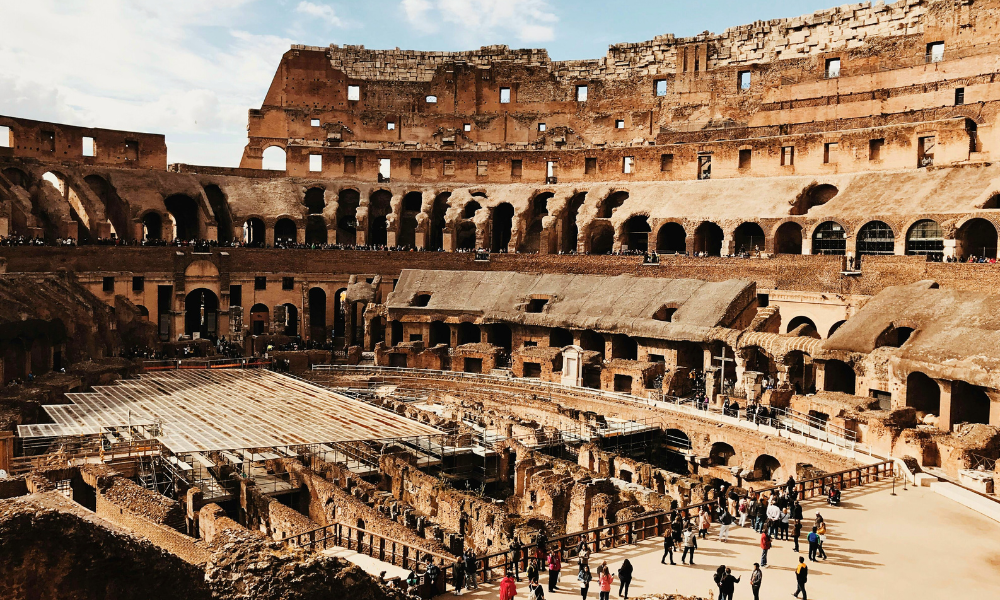
If there’s a place where the pulse of Rome is the strongest, it’s here. On the first day, the ideal is to dive straight into Ancient Rome—the land of emperors, gladiators, and stories that shaped the world.
Colosseum of Rome
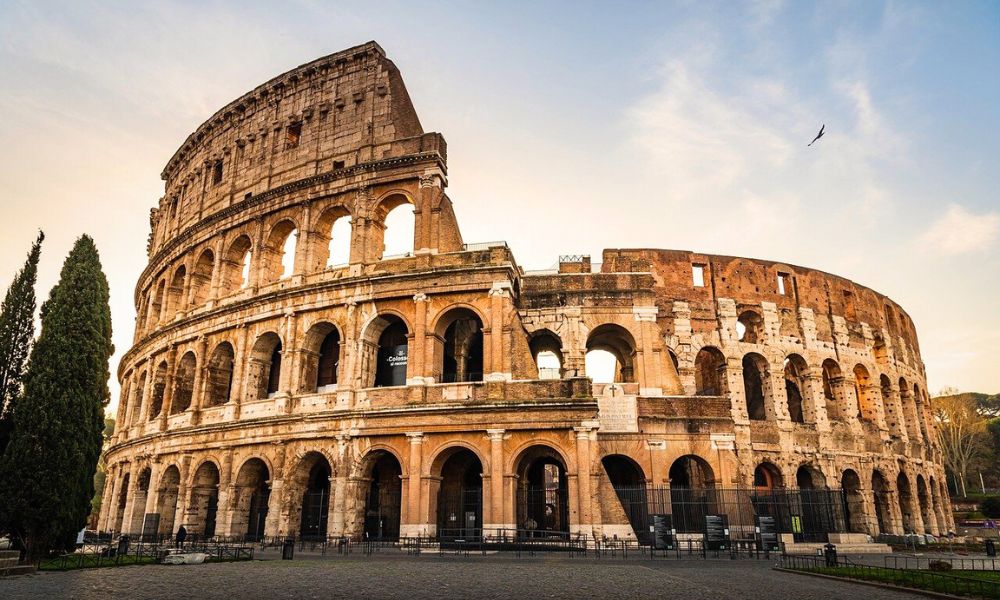
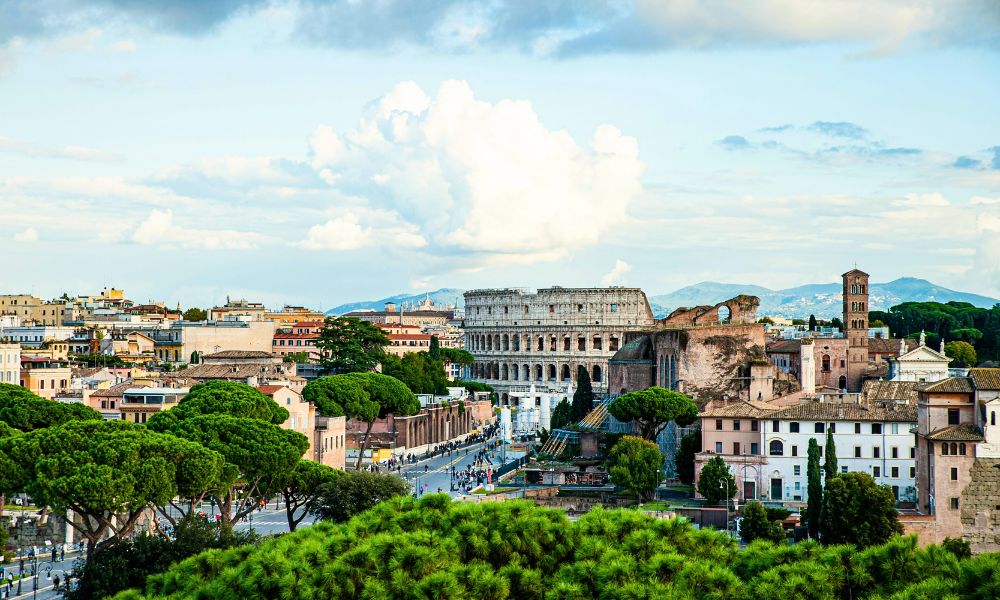
Start with the ultimate symbol of the Empire. Opened in 80 AD under Emperor Titus and commissioned by Vespasian, the Colosseum remains the largest amphitheater of the ancient world and one of Rome’s most iconic landmarks. This is a must-see attraction you cannot miss.
Interesting Fact:
- Free games were held here, funded by the emperors—a pure political strategy. The more the people were entertained, the more popular the ruler became.
After the Colosseum, in less than two minutes, you’ll see the Arch of Constantine, built to celebrate Emperor Constantine I’s victory over Maxentius at the Battle of the Milvian Bridge. Just a few steps away is the Ludus Magnus, the ancient gladiator training school—an unmissable spot for history enthusiasts or fans of gladiator movies.
If you prefer a more guided and interactive experience, it’s also possible to book in-person guided tours. [Click Here]
Roman Forum
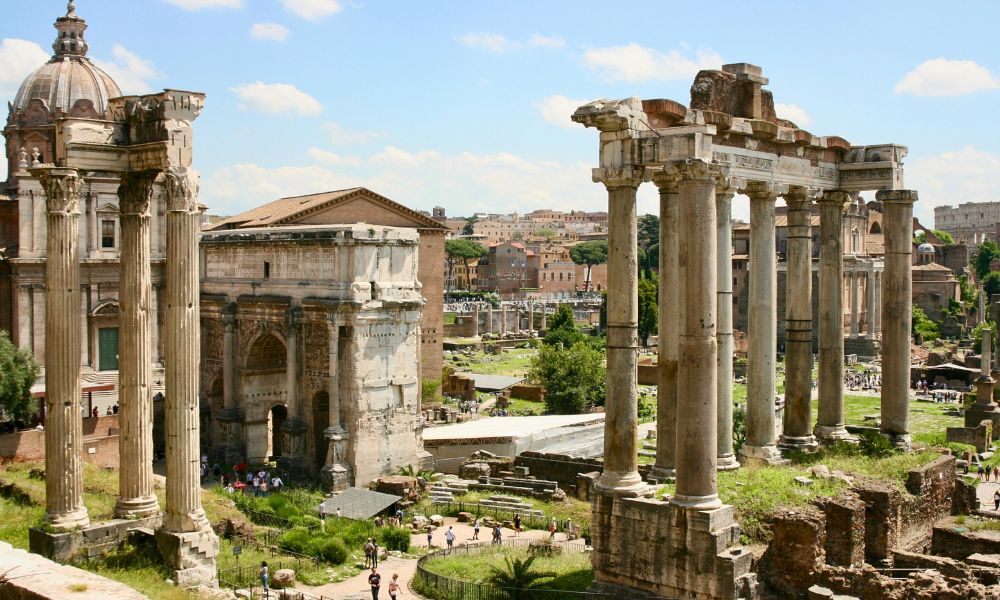
The Roman Forum was the political, religious, legal, and commercial heart of Ancient Rome for over a thousand years. Walking among its ruins, one can witness where speeches, trials, and celebrations shaped the destiny of an empire. The main entrance is near the Arch of Titus (up at the Colosseum level). It’s vast, so allow plenty of time to explore.
Palatine Hill
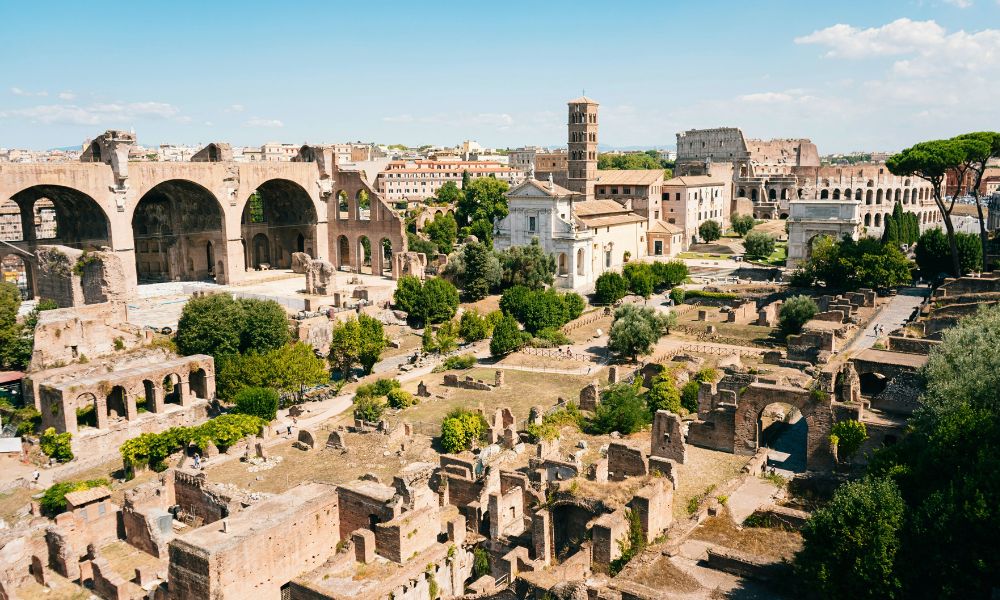
Palatine Hill is the birthplace of Rome and one of the oldest areas in the city. According to legend, it’s where Romulus founded Rome in 753 BC, making the visit even more fascinating. During the imperial era, it became the city’s most prestigious area, hosting the residences of emperors. Additionally, it offers stunning views of the Roman Forum and the Circus Maximus.
Entry is usually included with the Roman Forum ticket—ideally, visit it right after exploring the Forum.
If you have more time and want to delve deeper, we recommend visiting the Imperial Forums. They were built because the Roman Forum became too small for Rome’s political, administrative, and symbolic importance. Each emperor constructed their own forum to demonstrate power, expand public space, and celebrate military achievements. It’s an incredible experience and well worth the visit.
Capitoline Hill
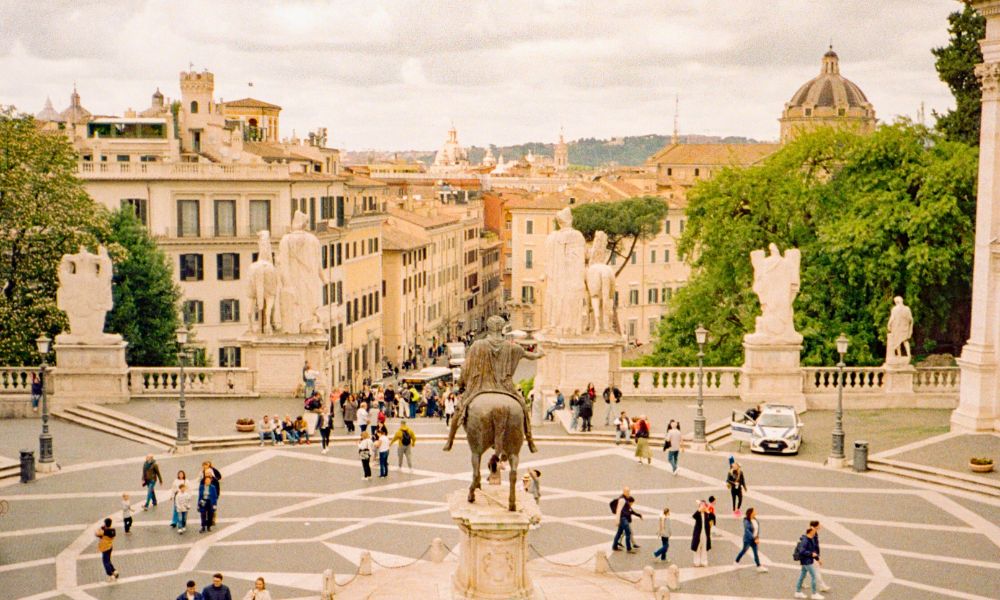
Continuing our journey from the Imperial Forums, a 5–10 minute walk brings you to Piazza del Campidoglio, one of Rome’s most harmonious squares, redesigned by Michelangelo. Crossing the piazza, you’ll encounter the famous Capitoline Museums, with the main entrance at the Palazzo dei Conservatori—an unmissable visit. Here you’ll find the renowned Capitoline Wolf, the original statue of Marcus Aurelius, and a collection spanning three millennia—Etruscan, Roman, and Renaissance art. Click here to skip the lines.
Vittorio Emanuele II Monument (Vittoriano)
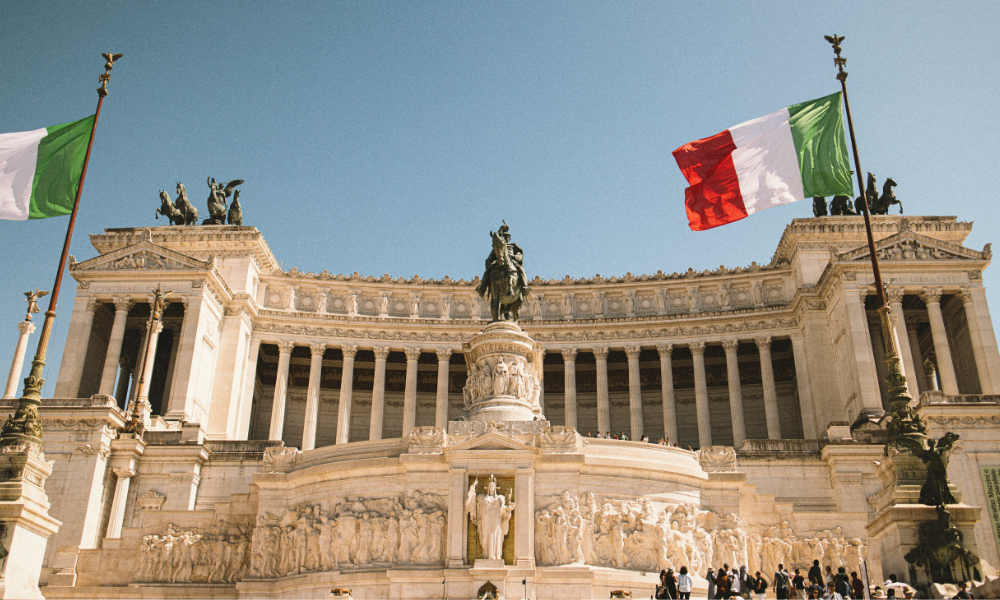
Just a few minutes from the Capitoline Museums, in Piazza Venezia, stands the Vittoriano. Entrance to the exterior is free, but the paid observation deck offers a breathtaking panoramic view, perfect for photos with all of Ancient Rome in the background. You can reach the terrace by elevator or stairs.
Fun Fact:
- Romans nicknamed the monument the “Typewriter.” Once you see it, you’ll understand why.
Lunch Suggestion: Monti Neighborhood — Where Rome Breathes Calm Among Ancient Ruins
After so many ruins and millennia of history, stroll over to Monti, one of Rome’s oldest and most authentic neighborhoods—a small labyrinth of narrow streets that feels suspended in time. Amid ancient façades, workshops, and cozy trattorias, you’ll find the perfect spot to pause: a coffee at the ivy-covered La Casetta a Monti, a pasta dish at Trattoria da Valentino, or a glass of wine at the historic Ai Tre Scalini, welcoming Romans and travelers since 1895. This neighborhood sits between the Colosseum and the Forum, yet curiously feels much less touristy—a hidden gem carefully kept by the locals.
Day 2 – Vatican City and Castel Sant’Angelo
After immersing yourself in Ancient Rome on the first day, today’s scene changes completely. We enter the spiritual and artistic heart of the city—a realm where the grandeur of the Catholic Church blends with centuries of Renaissance art, monumental staircases, popes, mysteries, and some of the most famous masterpieces in human history.
It’s a more contemplative day, full of beauty and emotion.
Vatican Museums + Sistine Chapel
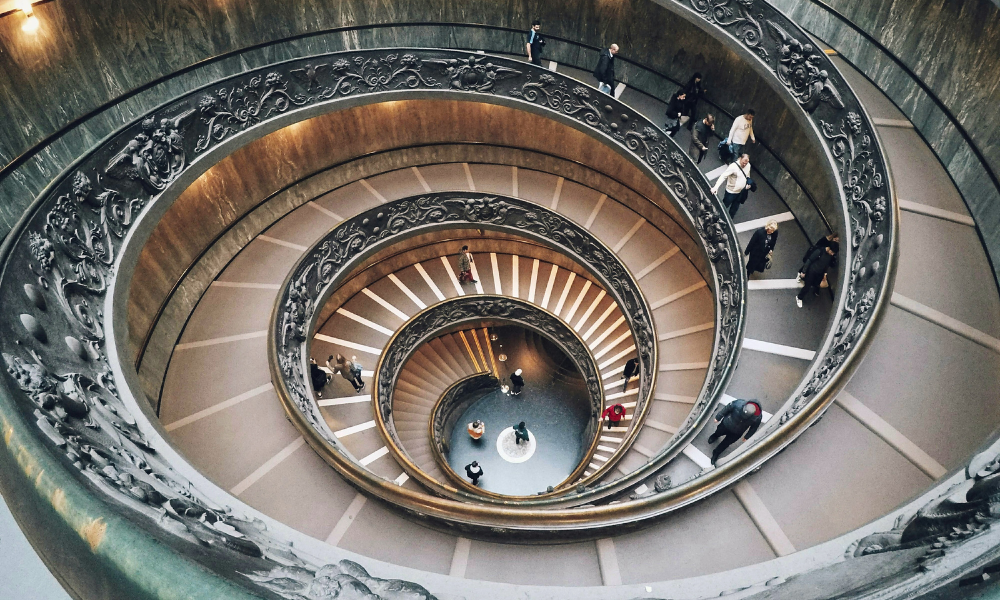
Nestled within the walls of Vatican City, the Vatican Museums house one of the largest and most remarkable art collections in the world. Founded in the early 16th century by Pope Julius II, these museums have grown over centuries to include thousands of works—from ancient Egyptian and Etruscan artifacts to Renaissance masterpieces. Walking through the galleries, visitors are not only tracing the history of art, but also stepping into the lives, tastes, and ambitions of popes who commissioned some of the most iconic works in human history.
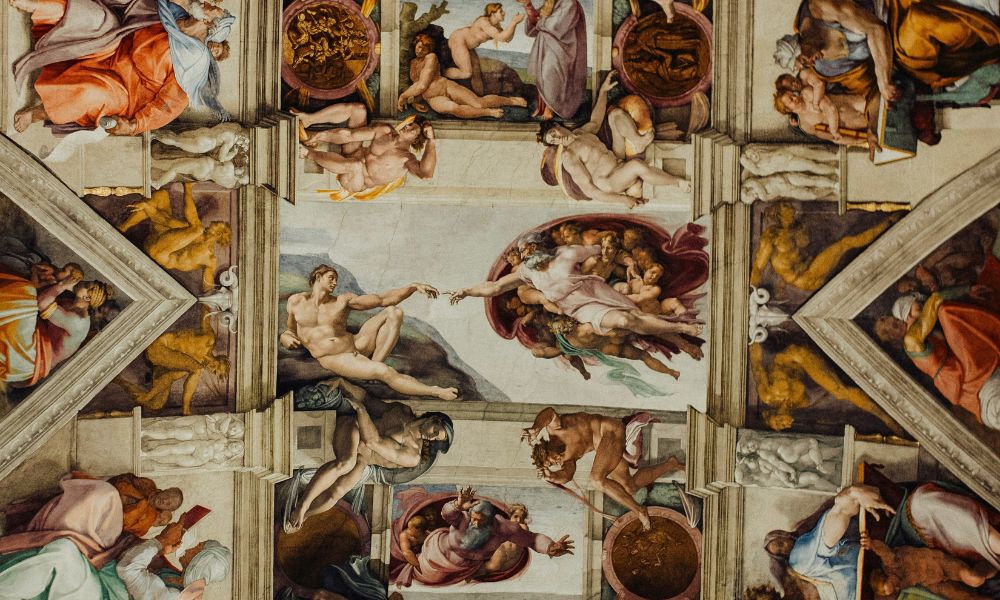
The visit to the Vatican Museums culminates in the Sistine Chapel, one of the most breathtaking settings ever created by humanity. Here, Michelangelo spent four years painting the ceiling—lying down, standing, twisting, as he described—creating scenes that changed the history of art. The Last Judgment fresco dominates the entire wall, while the famous gesture of God and Adam nearly touching has become a universal icon. It’s impossible not to be moved.
- You can purchase combined tickets for the Vatican Museums and the Sistine Chapel [Click here] to ensure a skip-the-line visit.
St. Peter’s Basilica
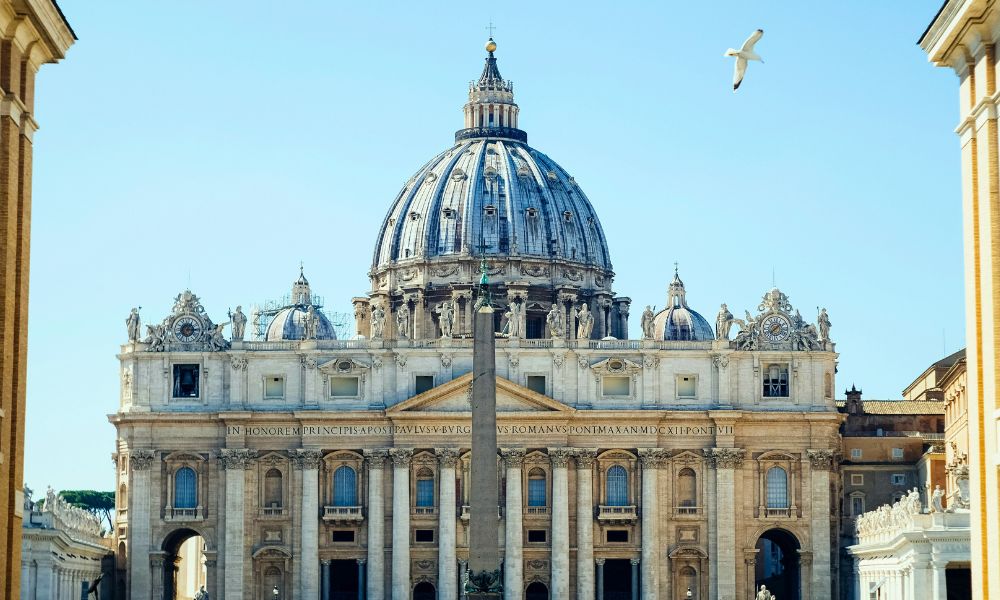
Leaving the Museums, the grandeur continues. St. Peter’s Basilica is the largest Catholic church in the world and a spectacle both inside and out. Right at the entrance, to the right, you’ll find the delicate Pietà, Michelangelo’s absolute masterpiece—sculpted when he was only 24 years old. It’s one of the most perfect sculptures ever created, and in person, it almost seems to breathe.
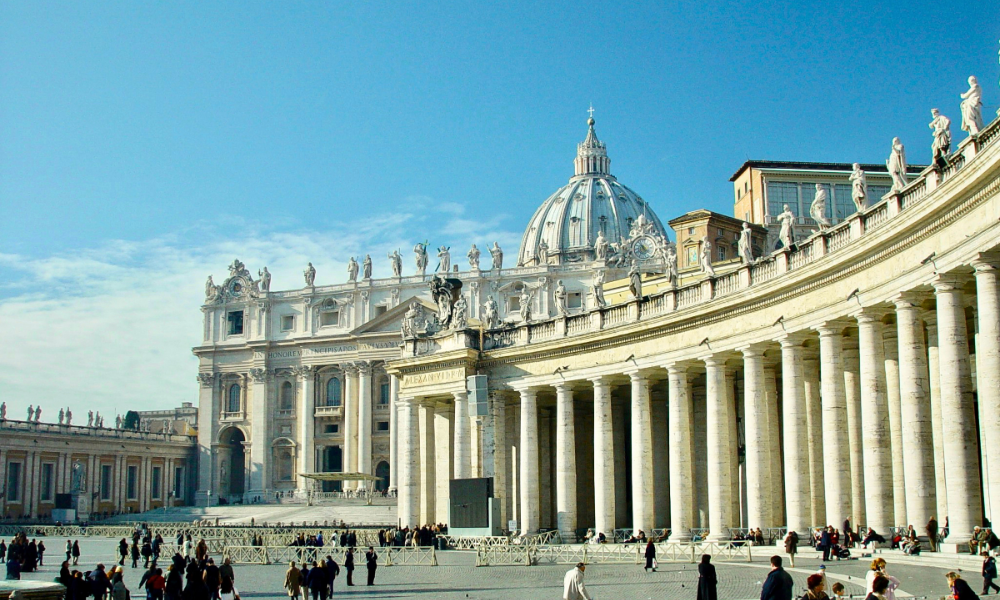
Entry to the Basilica is free, but climbing the dome (optional and paid) is one of Rome’s most unforgettable experiences. From above, St. Peter’s Square reveals itself in the shape of a grand embrace—just as Bernini envisioned, welcoming all who arrive.
Upon leaving the Basilica, take a deep breath.
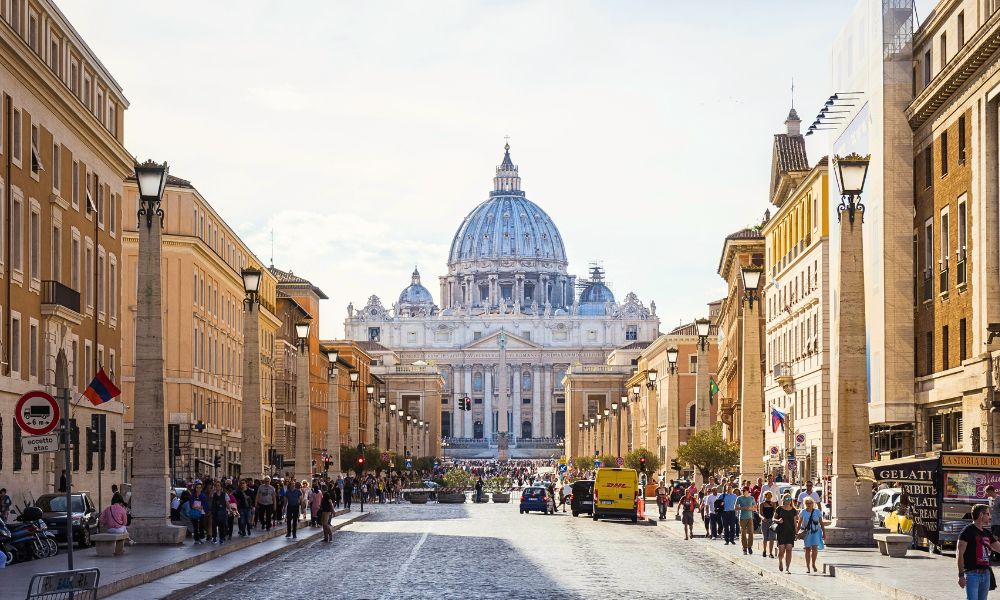
St. Peter’s Square is one of the world’s most iconic settings. Bernini’s colossal columns form a perfect circle, symbolizing the Church’s arms embracing its faithful. It’s impossible not to take a stunning photo—especially with the monumental façade in the background.
Castel Sant’Angelo
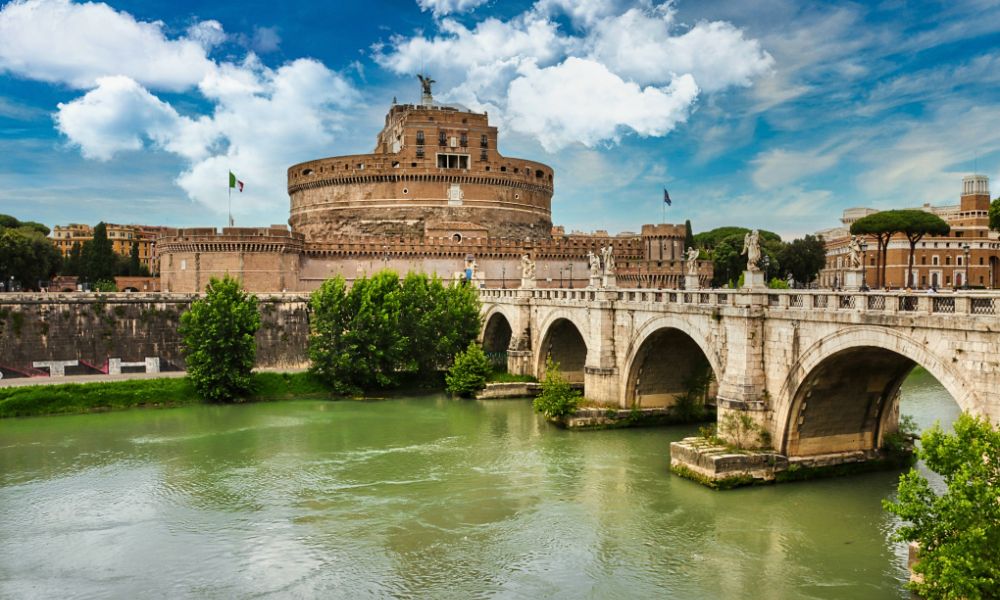
Following Via della Conciliazione, you arrive at Castel Sant’Angelo, a fortress that has served as Emperor Hadrian’s mausoleum, a prison, a palace, and a secret refuge for popes.
A fascinating fact:
- there’s an elevated corridor called the Passetto di Borgo, which connects the fortress directly to the Vatican. In times of danger, popes would escape through it—almost like a medieval tunnel from a movie.
The terrace offers a wonderful view, but the most beautiful moment happens even before entering: cross the Sant’Angelo Bridge, decorated with angels sculpted by Bernini and his students. It’s one of the most photogenic spots in Rome.
Lunch Suggestion: Borgo Pio — A Breather Between Two Historic Fortresses
After the artistic whirlwind of the Vatican, stroll to Borgo Pio, one of the most charming and tranquil neighborhoods in the area. It’s a historic street with low houses, colorful façades, and sidewalk tables—a little village within Rome. Here, you’ll find family-run trattorias, quaint shops, and cafés perfect for recharging your energy. It’s the kind of place where you can sit, take a deep breath, and watch Roman life pass by. Ideal for a hearty plate of pasta, a fresh salad, or simply a coffee before continuing your exploration.
Day 3 – Rome Historic Center
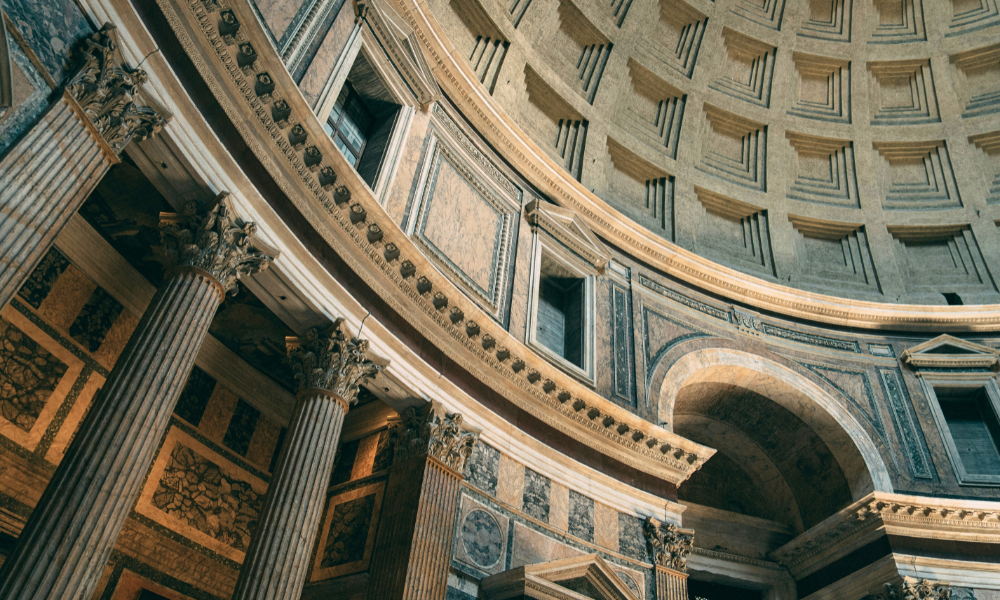
Today you step into the living heart of Rome—a mosaic of ancient streets, baroque churches, theatrical squares, and that magical mix of everyday life and grandeur that only Rome can offer. It’s a day to walk without hurry, to look up, catch the golden light on façades, and feel the city pulse around you.
Pantheon — Where Rome Touches the Sky
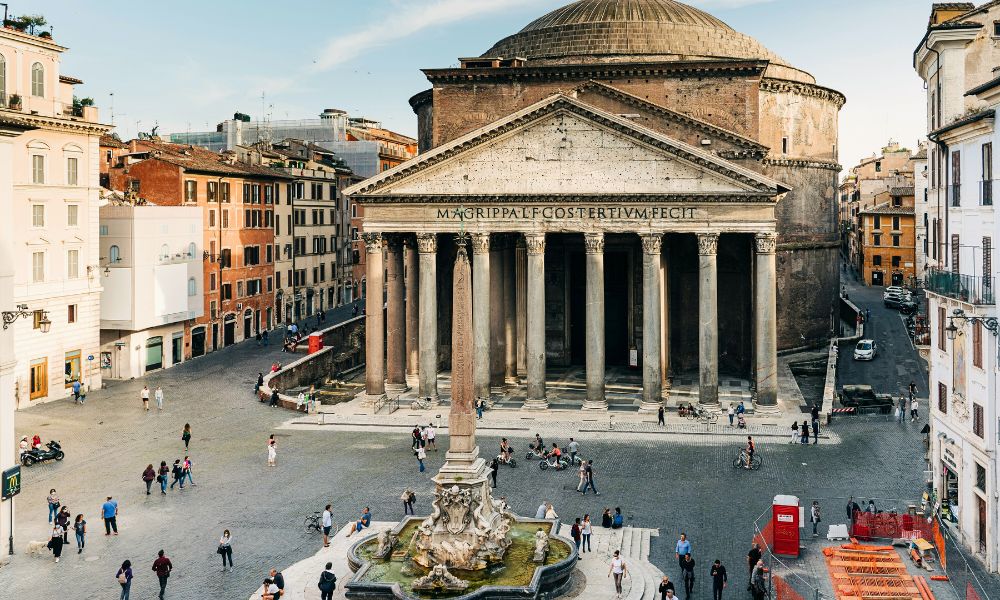
Start with the Pantheon, a masterpiece that has survived empires, centuries, and shifts in religion. Built in the 2nd century AD by Emperor Hadrian, it still boasts the largest unreinforced concrete dome in the world. The oculus, open to the sky, creates a theatrical light that changes with the hours. Rain? Yes, it comes in—but the floor has an ingenious drainage system devised by the Romans. It’s one of the most moving places in the city. A perfect temple, literally.
Since July 2023, entry to the Pantheon has become paid on Saturdays and Sundays, remaining free from Monday to Friday. If you want to save, it’s worth planning your visit for one of the free days.
The Best of Sacred Art in the Heart of Rome
Just a few steps from the Pantheon is Saint Mary of Minerva, an absolute rarity: one of the only Gothic churches in Rome amidst the vast Baroque landscape. Built over an ancient temple dedicated to the goddess Minerva, it houses true treasures—such as frescoes by Filippino Lippi and the delicate Risen Christ by Michelangelo, whose influence makes the sculpture seem to breathe under the gentle interior light.
Outside, you’ll be greeted by Bernini’s famous Elephant with Obelisk, one of the city’s most beloved (and photographed) sculptures.
Continuing our route, prepare for one of Baroque’s greatest visual tricks. In just a 3-minute walk, you reach Sant’Ignazio di Loyola.
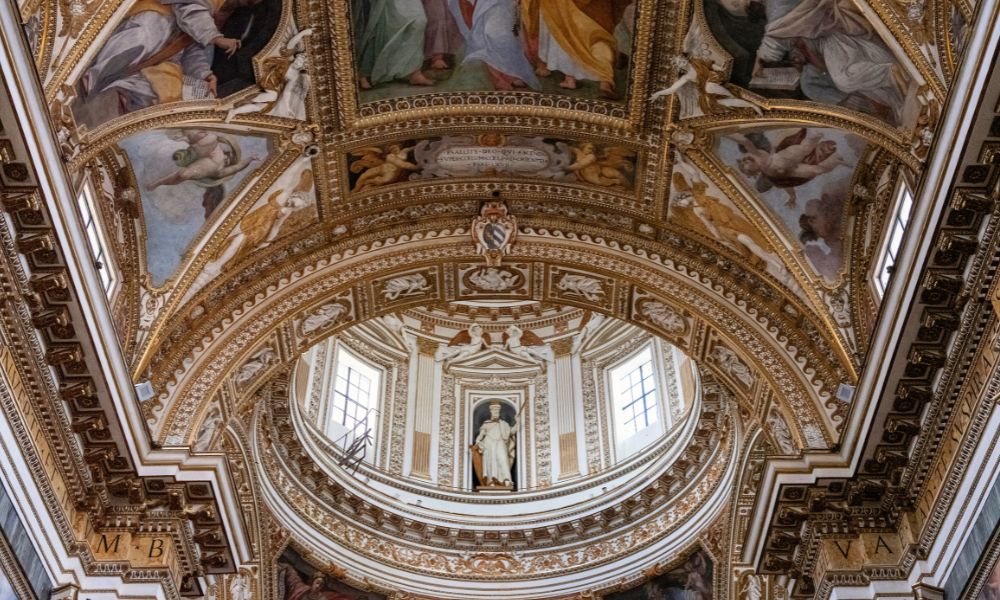
Here, painter Andrea Pozzo created one of the greatest optical illusions in art history: the ceiling seems to open into a monumental dome… but the dome does not exist. The perspective is so perfect that your brain completes what your eyes cannot see. It’s a spectacle of visual engineering—and entirely free.
Walking a few more minutes, another Roman treasure emerges: San Luigi dei Francesi. Behind its modest façade lies one of the most important collections in the world: Caravaggio’s triptych depicting the life of Saint Matthew.
The intensity of the scenes, the dramatic play of light and shadow, and the almost cinematic energy make these works an unmissable experience—especially because they are displayed exactly where they were intended to be seen.
Piazza Navona — An Open-Air Baroque Stage
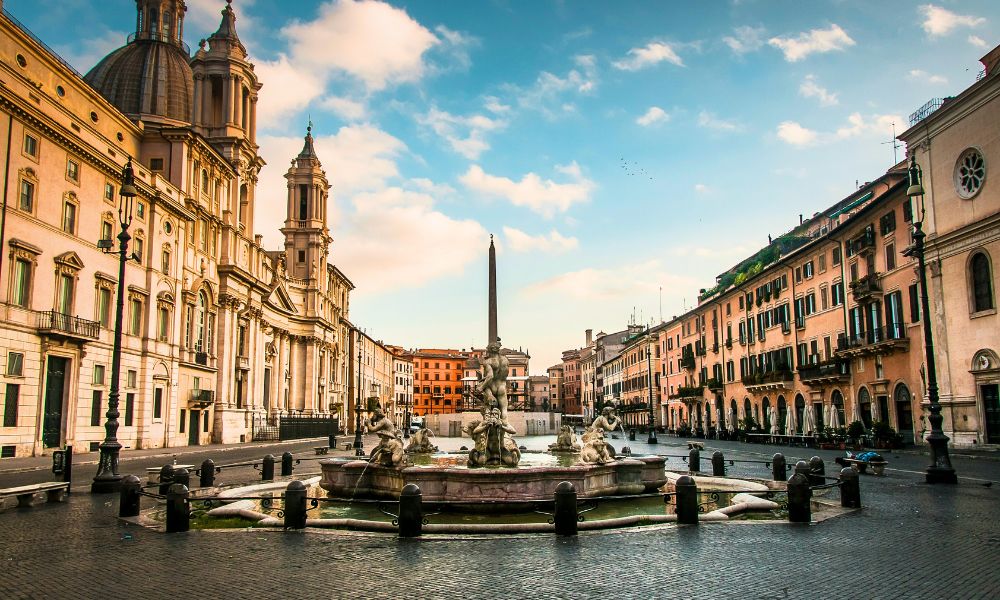
Wandering through the narrow streets, you arrive at Piazza Navona, one of Europe’s most iconic squares. Built over the ancient Stadium of Domitian, it still preserves the elliptical shape of the arena.
At the center stands Bernini’s Fountain of the Four Rivers, representing the great rivers known in the 17th century—each figure with its own personality. It’s a perfect setting for photos, gelato, and little pauses throughout the day.
Continue along the charming Via del Governo Vecchio, filled with vintage shops, cafés, and Renaissance façades. It leads you to Campo de’ Fiori, a vibrant square where one of Rome’s oldest markets takes place in the morning, and at night, bars bring it to life.
Bonus — Palazzo Doria Pamphilj: A private palace with one of Rome’s most impressive private collections. Highlights include Velázquez’s Portrait of Innocent X. The Doria Pamphilj Gallery is absolutely stunning and well worth including in your itinerary. [Click the link for advance tickets]
Tiber Island → Trastevere — Bohemian Rome at Dusk
Cross the small Tiber Island, a place that feels like it came straight out of an ancient tale, and arrive in Trastevere, one of the city’s most beloved neighborhoods. Cobblestone streets, dim lights, cozy restaurants, live music… it’s the perfect place to end the day. Dine at a traditional trattoria, sip local wine, or simply wander the streets. Trastevere is pure charm.
Day 4 – Major Basilicas, Sacred Art, and Sunset at Gianicolo
Today’s itinerary breathes spirituality, ancient marble, and art that seems to reach for the divine. It’s a quieter, more contemplative day—one where Rome appears to whisper through every nave, sculpture, and stained glass illuminated by the light.
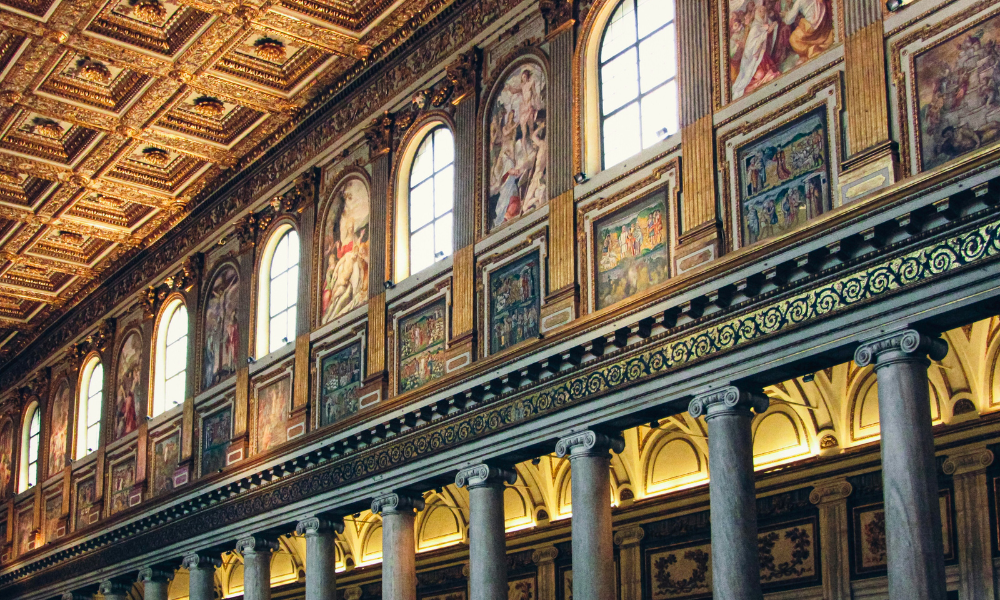
Santa Maria Maggiore: The journey begins at one of Rome’s four Papal Basilicas, a place where Byzantine splendor shines as if it has never aged. It is one of the most important churches in the city, closely tied to the history of Christianity itself. Its 5th-century mosaics and golden ceiling—legend says made with the first gold from the Americas—make the visit almost ethereal.
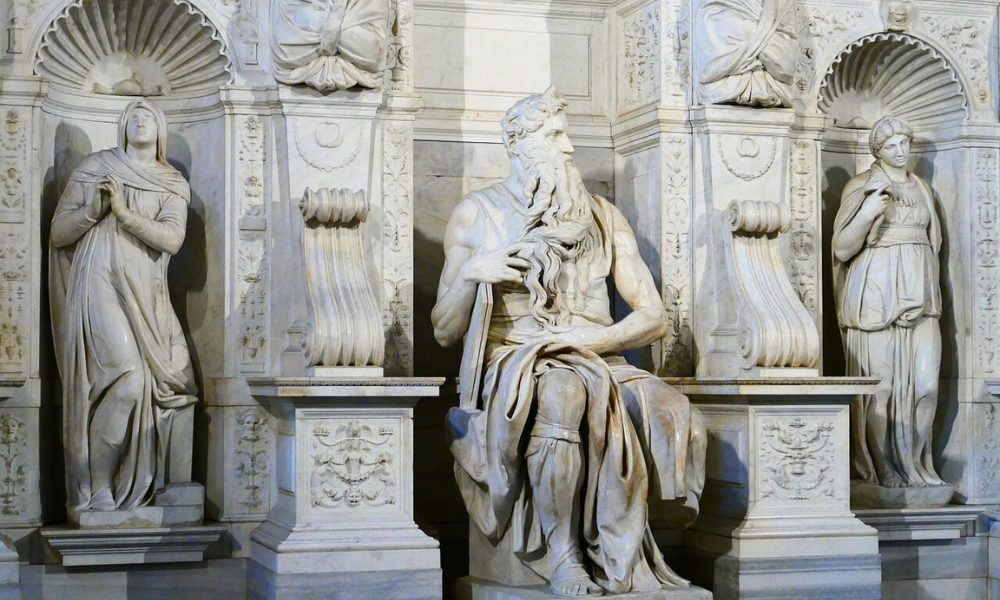
San Pietro in Vincoli (Michelangelo’s Moses): A few steps from Santa Maria Maggiore, you’ll find one of the most expressive treasures of the Renaissance: Michelangelo’s Moses. The statue, famous for its intense and almost lifelike gaze, silently watches over the chains that, according to tradition, bound Saint Peter. The church is modest from the outside but monumental within—and entirely free to visit.
St. John Lateran: Known as the mother of all churches, it was the first official basilica of Rome. Even before St. Peter’s, it was here that religious power was concentrated. Its monumental doors, silent cloister, and exuberant Baroque ceiling—all so grand and ancient—make you feel as if you’ve stepped into the living heart of Christendom.
Next door is the Scala Santa. History tells us that these steps are the same ones Jesus Christ ascended during his trial before Pilate in Jerusalem. According to tradition, the staircase was brought to Rome in the 4th century by Saint Helena, mother of Emperor Constantine, who had them transported from Jerusalem to preserve this sacred relic. They have become a symbol of faith and devotion: many pilgrims climb the stairs on their knees, step by step, turning each movement into a profound spiritual experience.
National Roman Museum
After this spiritual immersion, the National Roman Museum brings you closer to the past with sculptures, mosaics, reconstructed houses, and objects of daily Roman life. It’s one of the most comprehensive museums to understand Ancient Rome beyond the monuments.
Tickets usually range from €12–€15, often including access to multiple museum sites.
Belvedere del Gianicolo (Sunset)
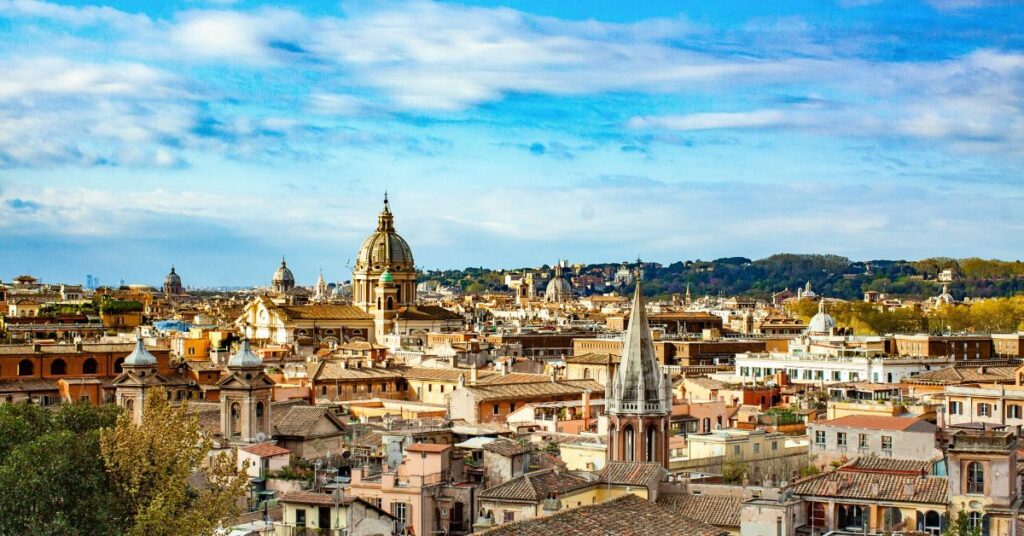
We end the day at Gianicolo, considered by many the most romantic viewpoint in Rome. The view encompasses the entire city—domes, terracotta rooftops, steeples, and bell towers—while the sun sets behind Trastevere.
It’s the kind of evening that lingers in memory like a warm, golden, eternal suggestion.
Day 5 – Classic Squares, Artist Streets, and Farewell at the Trevi Fountain
The last day in Rome is light, luminous, and full of small charms—those moments that linger in memory like scenes from a film. Here, Rome reveals itself in a softer way: expansive squares, quiet streets, lively staircases, and a fountain that holds millions of wishes.
Piazza del Popolo
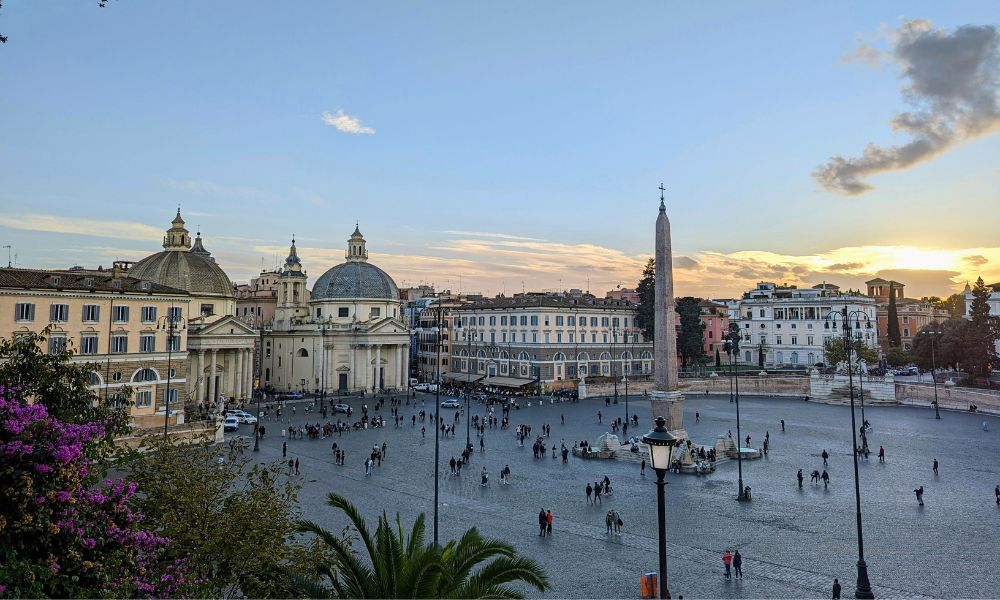
We begin at the city’s grand northern gateway: the elegant Piazza del Popolo, where travelers from around the world have arrived for centuries.
Among Egyptian obelisks and symmetrical fountains, the Porta del Popolo opens the way to the historic center. The square seems to embrace every visitor—and it’s impossible not to feel that Rome is preparing a special farewell.
From the square, follow the refined Via del Babuino, lined with antique shops, boutiques, and cafés. Just nearby is one of the most beautiful and photogenic streets in the city: Via Margutta—where Fellini once lived and where artists keep studios tucked away in ivy-covered courtyards.
It’s a gentle, quiet walk, perfect for breathing in Rome’s most creative and bohemian side.
Villa Borghese Gardens
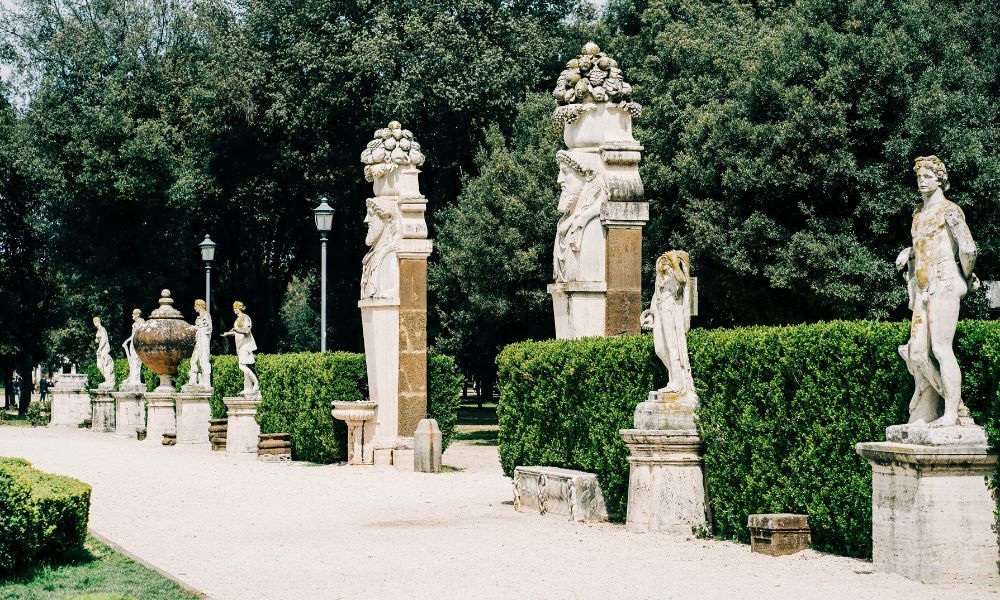
Heading slightly uphill, the city opens into greenery, lakes, and viewpoints.
Villa Borghese is Rome’s most elegant park: tree-lined paths, a small lake with rowboats, hidden sculptures, and the unforgettable view from the Pincio Terrace, where Piazza del Popolo unfolds below like a living painting.
It’s the ideal place to slow down before heading to the most romantic part of the itinerary.
Piazza di Spagna and the Spanish Steps (Scalinata di Trinità dei Monti)
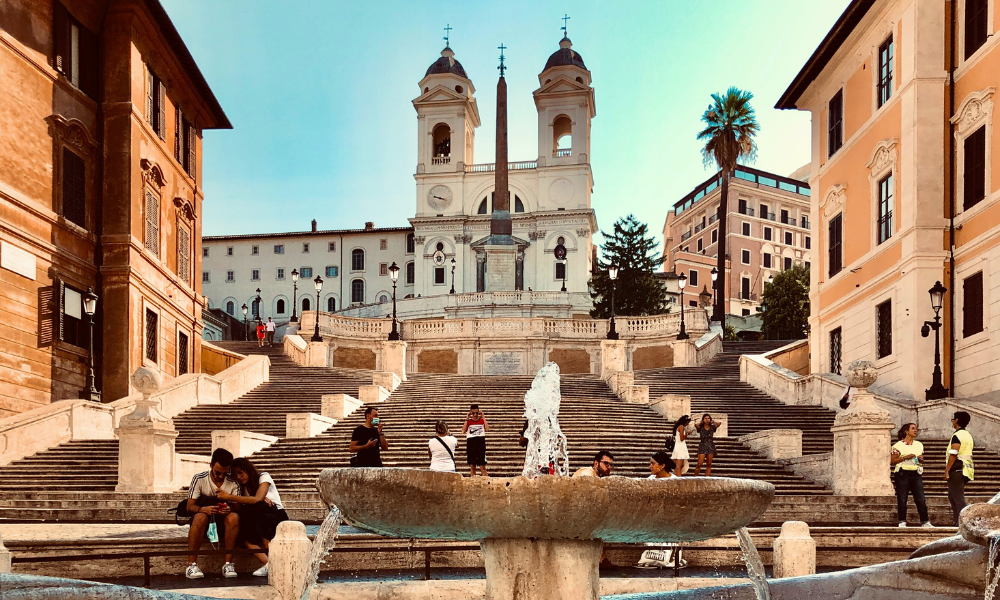
Rome’s most famous staircase emerges like a stage: flowers, street performers, couples, and tourists lost in daydreams.
At the top, the Trinità dei Monti Church watches over it all with serenity.
Here, Rome seems suspended in time—and it’s impossible not to pause and soak in the moment.
Trevi Fountain
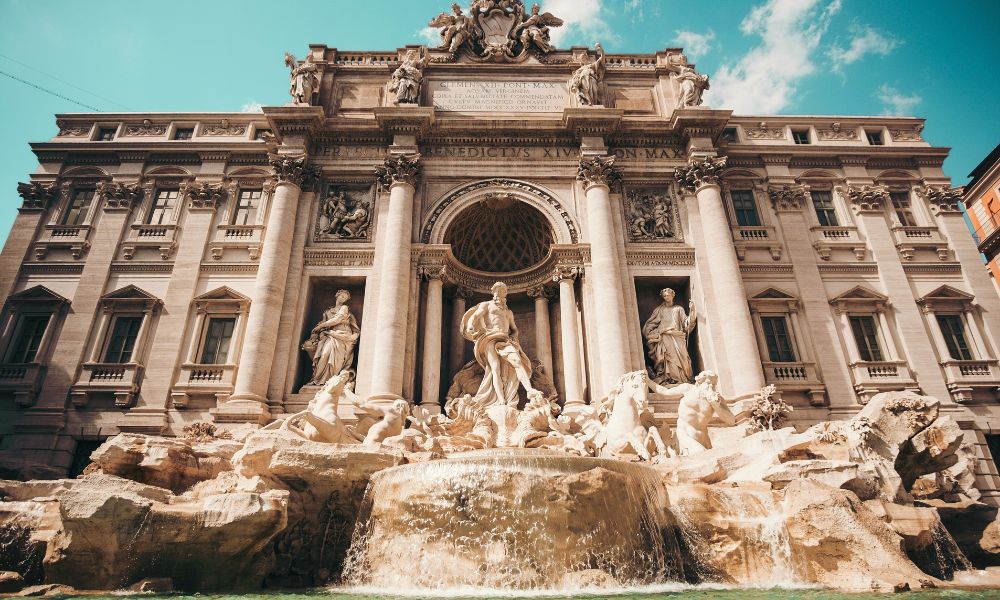
And then, the perfect finale.
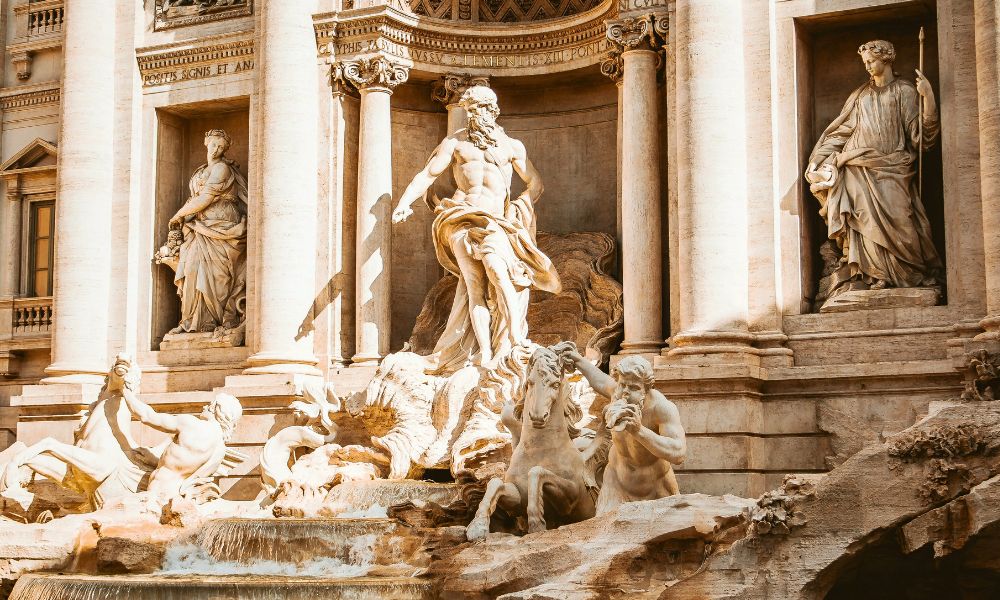
The Trevi Fountain is more than a monument—it’s a place of promise. Water flows like music, marble gleams, and thousands of wishes mingle in its depths. The best times to visit are 7–9 AM, ideal for photos without crowds and enjoying the soft morning light, or 5–7 PM, when the fountain is lit by the setting sun, creating a magical atmosphere. Avoid peak hours: between 11 AM and 4 PM, especially in high season, the area is crowded and photos are tricky.
Now, the best part…
The ritual is simple, almost sacred: Turn your back, coin in your right hand, toss it over your left shoulder. If done sincerely, they say you will always return. And in Rome, everything seems possible.
Practical travel tips for Rome
Before you set off to explore Rome, a few practical tips can make your experience smoother, lighter, and far more enjoyable.
- Buy tickets in advance — it saves A LOT of time.
- Rome is walkable — use public transport only for longer distances.
- Carry your ID — most attractions require identification, so it’s better to be prepared.
- Restaurants — During peak tourist seasons, popular restaurants fill up fast. It’s worth reserving ahead, especially in the evening or at the most sought-after spots.
- Churches, basilicas, and the Vatican — Shoulders and knees must be covered. Even in hot weather, bring a scarf or light cover-up.
- Watch your belongings in crowded areas. Like any major tourist city, Rome has a risk of petty theft— especially on public transport, stations, and very touristy areas. Stay aware.
- Wear comfortable shoes.
- Bring a reusable water bottle — Rome’s fountains provide clean, drinkable water.
Rome is a city that cannot be fully seen in a single glance—and perhaps not even in a lifetime.
But in 5 days, you can feel its soul, hear its stories, and collect memories that will stay with you forever. If your time is shorter, choose only the attractions that speak most to your heart and make every moment an unforgettable experience. Let this guide be the start of your own love letter to the Eternal City. And when you toss your coin into the Trevi Fountain, may it be a promise that you will return.
Write your own letter to Rome and share your dreams, stories, and memories here in the comments.
Plan Your Trip
For tours, activities, airport transfers, and skip-the-line tickets, we rely on GetYourGuide — a platform we’ve personally used and trust.
We use and recommend Omio.com to book trains, buses, and flights across Europe. It’s a reliable platform that makes comparing routes easy and helps you travel smoothly between cities.
If you’re planning a trip around Europe, you might be interested in these articles:
Discover the Magic of London: 10 Must-Visit Places for Harry Potter Fans
14 Must-Visit Beatles Spots in London + Liverpool: A Musical and Historical Journey
4 Days in London: The Ultimate Itinerary & Travel Guide
How to Use the Paris Metro: A Complete Guide to Tickets, Passes, and Stations