
Paris is one of those cities you don’t just visit — you feel.
It is made of soft light at the end of the afternoon, cafés that are poetic in their beauty, and ancient streets that transport you through time. Amid so much beauty, five days will give you an unforgettable first chapter in the City of Light.
This is a 5-day Paris itinerary, carefully planned to balance the iconic sights with moments of calm and discovery — exactly the way we like to travel: with open hearts, depth, and attention to every detail.
Welcome to your first letter from Paris.
How to Use the Paris Metro: A Complete Guide to Tickets, Passes, and Stations
How to Get from Paris Airports to the City Center?
Paris has three main airports: Charles de Gaulle (CDG) — the largest and busiest, Orly (ORY) — widely used for European flights, and Beauvais (BVA) — the favorite of low-cost airlines like Ryanair.
Charles de Gaulle is about 25 km from central Paris, Orly about 15 km, and Beauvais about 85 km from the city. From any of these airports, you have several convenient ways to reach Paris: the efficientRER train, buses/shuttles, private transfers, or an official taxi.
The RER B train connects Charles de Gaulle Airport directly to central Paris, stopping at key stations like Gare du Nord, Châtelet–Les Halles, and Saint-Michel Notre-Dame. In just 30 to 40 minutes, you can reach the heart of the city without worrying about traffic. Trains run roughly from 4:50 a.m. to 11:50 p.m., with departures every 10 minutes during peak hours. Tickets cost around €14.00, making it the fastest and most cost-effective option for direct access to the city.
The Orlyval is an automated train connecting Orly Airport to Antony station, where you transfer to the RER B toward central Paris. It runs every 5–7 minutes throughout the day, with service operating roughly from 6:00 a.m. to 11:30 p.m. The full journey takes about 35 to 45 minutes, and tickets cost around €14.00. If you are traveling from Orly Airport and using the Orlyval + RER B combination, there is no need to purchase two separate tickets — a single ticket covers the entire journey, from the airport all the way to central Paris.
For convenience and to avoid queues, tickets can be purchased in advance on the official website.
The Roissybus offers a direct connection between Charles de Gaulle Airport and the Opéra district, one of the most central and convenient areas of Paris. Travel time ranges between 60 and 75 minutes, depending on traffic. It operates daily from 5:15 a.m. to 12:30 a.m., with buses departing every 15–20 minutes. Tickets cost approximately €14.00 on the official website, providing a comfortable alternative for travelers who prefer to avoid metro transfers.
Official Beauvais Bus → Porte Maillot:
Beauvais Airport (BVA) is the farthest of the three main Paris airports and is mostly used by low-cost airlines such as Ryanair and Wizz Air. The most practical (and almost only) way to reach Paris is the official airport bus, which connects directly to Porte Maillot. Travel time ranges between 1 hour 15 minutes and 1 hour 30 minutes, with departures timed to match flight arrivals. Tickets cost between €17.90 and €29.90 per trip.
The only practical options are:
> Official bus (standard choice)
> Taxi or Uber, which can be very expensive due to the distance.
For many travelers, it is worth paying a little more to fly into Charles de Gaulle (CDG) or Orly (ORY). Both are much closer to central Paris and offer multiple transport options: train, metro, bus, taxi, private transfers, and more affordable private services.
In the end, choosing CDG or ORY can be cheaper, faster, and far more convenient than traveling via Beauvais.
After a long flight, Paris doesn’t ask you to decipher maps or navigate crowded platforms right away. Sometimes, the most elegant way to begin your journey is simply to be warmly welcomed.
If comfort and practicality matter to you, private transfers in Paris offer a seamless connection between airports, train stations, and your accommodation — with no stress, stairs, or uncertainty. A driver meets you at arrivals, helps with your luggage, and takes you directly to your destination, allowing your first moments in the city to unfold calmly and effortlessly.
It’s an excellent choice, especially for those traveling with family — particularly with babies or young children — carrying a lot of luggage, or arriving in Paris late at night. By booking in advance, you ensure a smoother, more comfortable, and worry-free arrival, starting your trip with the peace of mind that everything is already taken care of from the very first moment. Plan ahead and book your transfer through this link.
Official taxis at CDG and ORY airports operate with fixed fares, making them a reliable and stress-free option for travelers. They are especially convenient for families or groups, late-night arrivals, and anyone traveling with multiple or heavy suitcases.
This is often the most practical way to reach your hotel, as it offers door-to-door service without transfers or waiting time. For updated fares and full details, always consult the official taxi websites of CDG and ORY airports.
Always look for official taxis, identified by a roof light and a regulated queue.
When to Visit Paris?
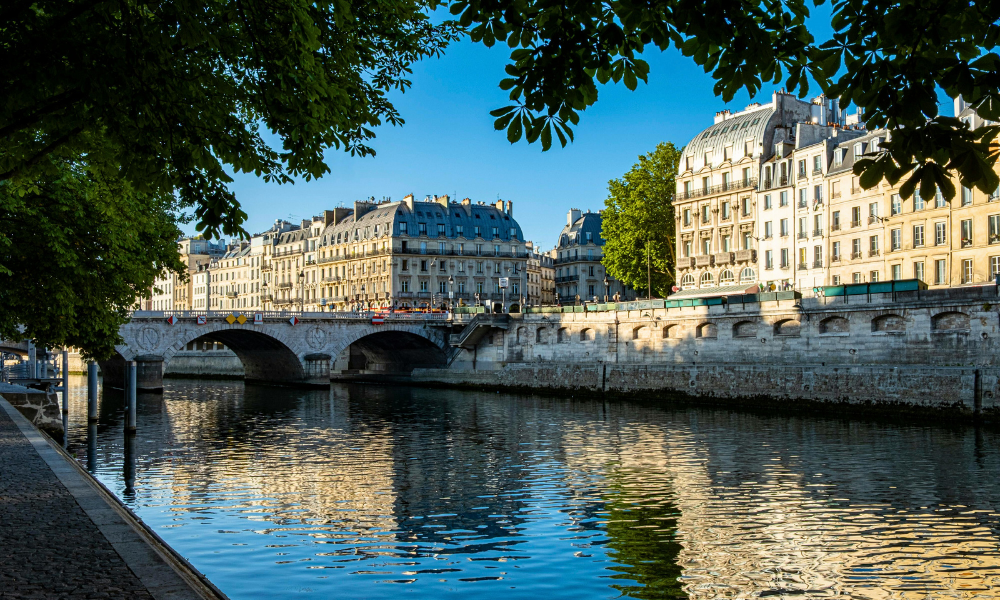
Paris is enchanting in any season, but the experience can be even more special in certain months of the year. The best seasons to visit the French capital are spring (March to May) and autumn (September to November).
In Spring, Paris blooms. Temperatures range between 50–68°F (10–20°C), parks are filled with colors, and the city gains a romantic, vibrant atmosphere. Additionally, March and early April often offer more affordable hotel rates and flights — perfect for travelers who want to save without missing the experience.
In Autumn, with temperatures ranging from 54–72°F (12–22°C) in early September and gradually cooling into November, Paris transforms into a golden scene: yellow leaves, soft light, and ideal weather for walks along the Seine or through the city’s gardens.
Summer (June to August) is the busiest season, with temperatures between 68–86°F (20–30°C), occasionally peaking at 95°F (35°C). The city is more crowded, and prices are higher, but the lively atmosphere, outdoor festivals, and long daylight hours — until nearly 10 p.m. — offer a unique charm for those who enjoy energy and movement.
Winter (December to February) is cold, with temperatures between 32–46°F (0–8°C), but brings its own magic: Christmas decorations, cozy cafés, holiday markets, and fewer crowds at attractions (except during Christmas and New Year). For those who love the European winter and want to avoid lines, it’s an excellent choice.
How Many Days to Stay in Paris?
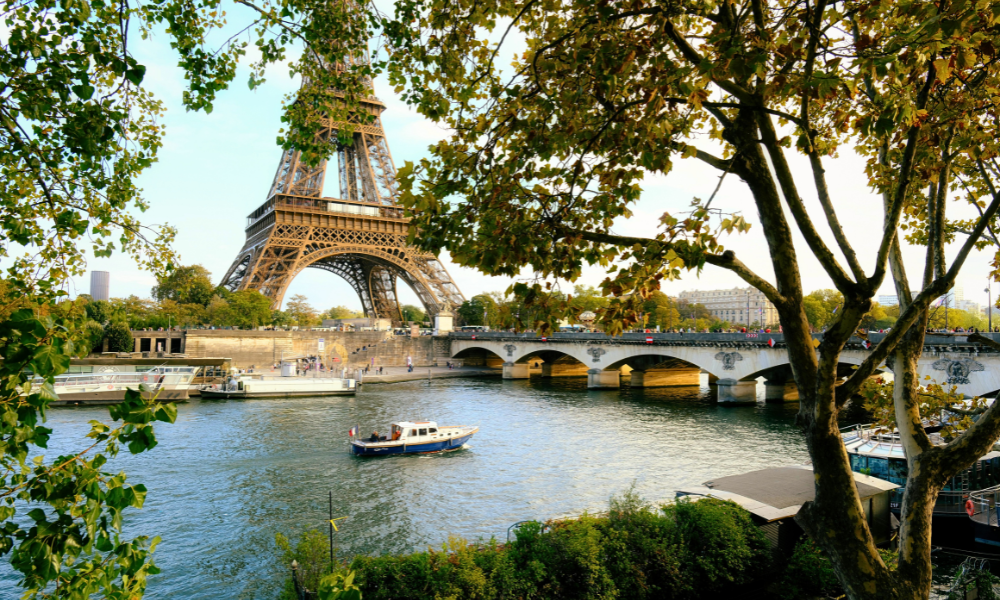
The ideal time to visit Paris depends on your pace and how much you want to get lost in the streets, art, and charm of the city.
If you have limited time, a minimum of 3–4 days is recommended — enough to see the classic sights, such as the Eiffel Tower, the Louvre, and Notre-Dame Cathedral.
But Paris is rich in history, culture, and hidden charms. If you can extend your trip, 5–7 days turn your journey into a fuller experience: exploring charming neighborhoods like Montmartre and Le Marais, savoring cafés and boulangeries, and feeling the true Parisian spirit.
Where to Stay in Paris?
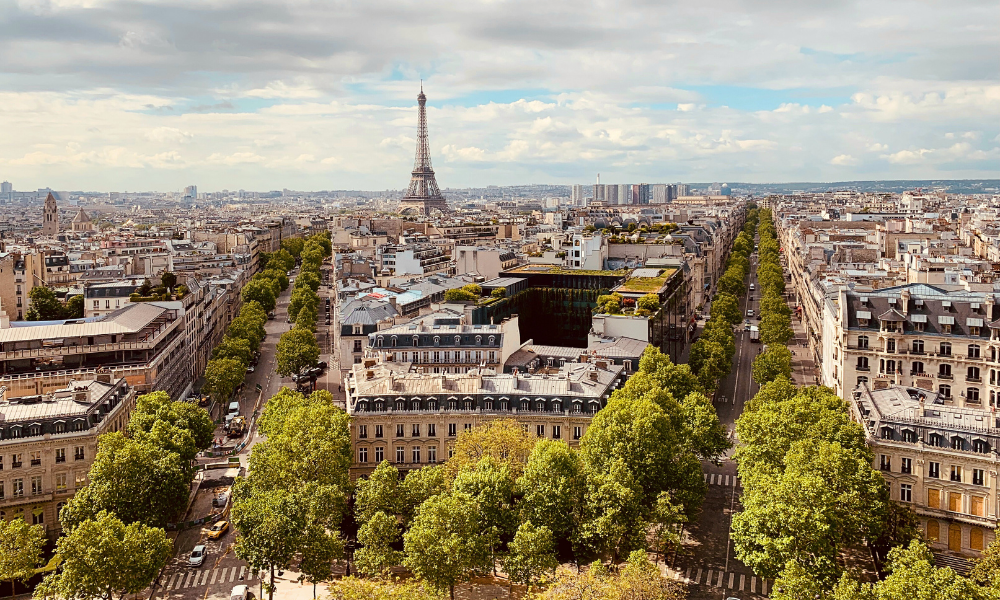
If you seek convenience and want to experience Paris with charm, staying in the city center is ideal. Being here saves travel time, allows better enjoyment of attractions, and keeps you close to some of the most iconic landmarks: the Eiffel Tower, the Louvre, and Notre-Dame Cathedral.
Other charming neighborhoods worth considering include:
- Le Marais — historic, vibrant, full of cafés and boutique shops.
- Montmartre — bohemian, artistic, perfect for lovers of culture and panoramic views.
- Saint-Germain-des-Prés — elegant, traditional, and full of literary cafés.
- Latin Quarter — youthful, lively, close to universities and must-see attractions.
- Opéra / Grands Boulevards — central, practical, and great for shopping and transportation.
We use and recommend booking through Booking.com. The platform is reliable, offers good customer service and, in most cases, allows free cancellation — ideal for those who like to travel with flexibility and peace of mind.
Unmissable Tours & Experiences in Paris
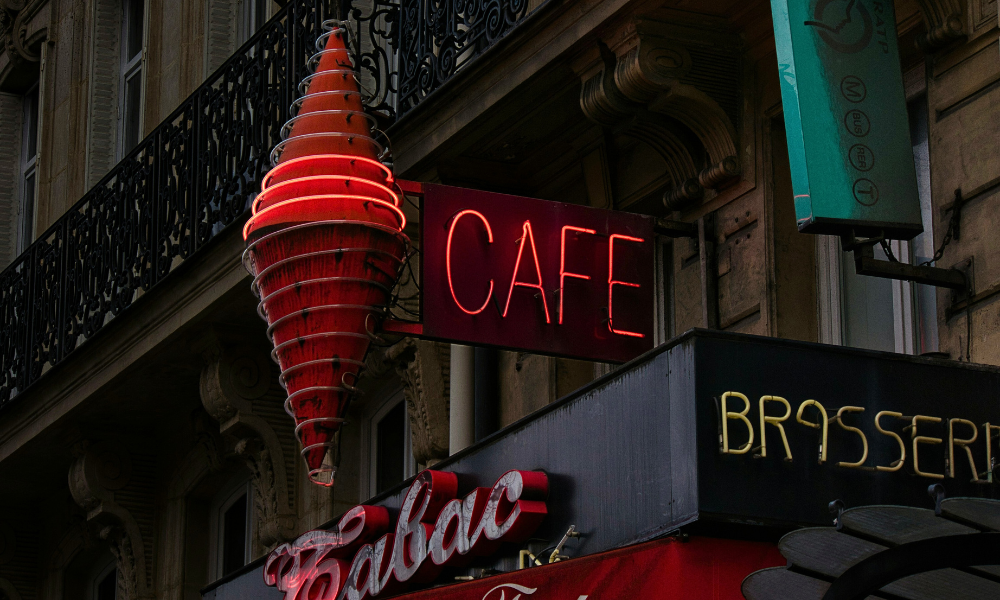
If you want to experience Paris in a deeper and more meaningful way, these unique and thematic tours can completely transform your trip. From revolutionary history and literary legends to gourmet tastings and the charming locations featured in Emily in Paris, there’s something here for every kind of traveler.
Click the links below to check availability, read verified reviews, and secure your spot in advance:
- Paris: French Revolution Tour Relive the 14th July 1789 — Step back into one of the most dramatic chapters in French history as you walk through the streets where revolution reshaped an entire nation.
- The Official Emily in Paris Locations Walking Tour — Stroll through the charming Parisian streets featured in the hit Netflix series and see the real-life cafés, squares, and neighborhoods that brought the show to life.
- Paris: Le Marais District Food Tour with 10+ Tastings & Wine — Indulge in authentic French flavors as you sample cheeses, pastries, chocolates, and wine in one of Paris’ most historic and vibrant neighborhoods.
- Paris: Baking Insider Experience — Go behind the scenes in a traditional Parisian bakery and learn the secrets of crafting classic French pastries from expert bakers.
A well-chosen tour doesn’t just fill your schedule — it creates the kind of moments you’ll remember long after you’ve left Paris.
What to Do in Paris in 5 Days?
Day 1 — Paris Introduces Itself
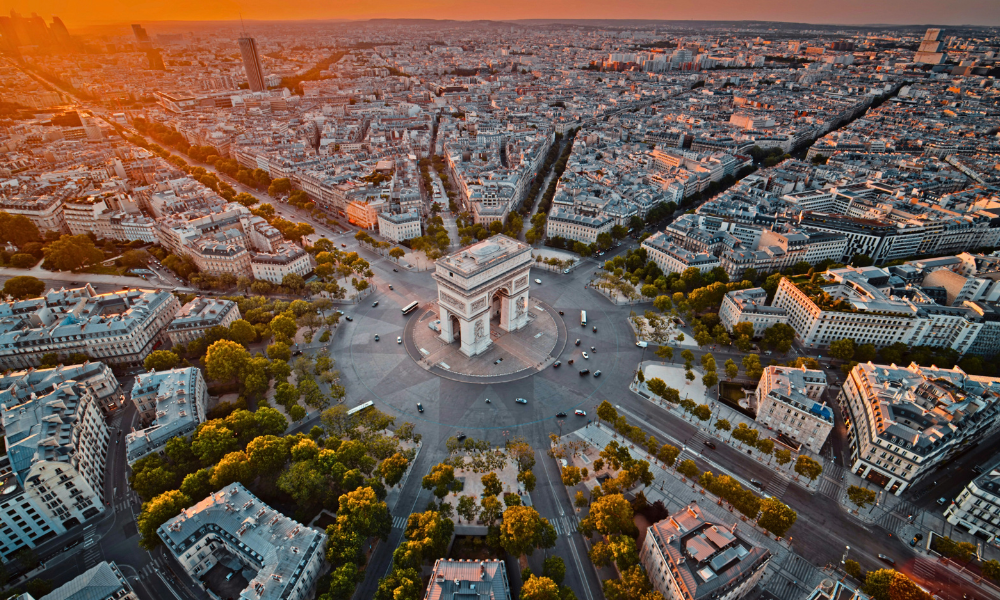
The first day in Paris doesn’t call for rushing. It asks for attentive eyes, slow steps, and the willingness to feel. This is the day the city presents itself without demanding anything in return — just your presence. It’s an invitation to walk, observe the details, sit by the river, and let Paris reveal itself gradually. The city doesn’t give itself all at once — it embraces you slowly, knowing that the best memories begin with contemplation.
Eiffel Tower — The First Encounter
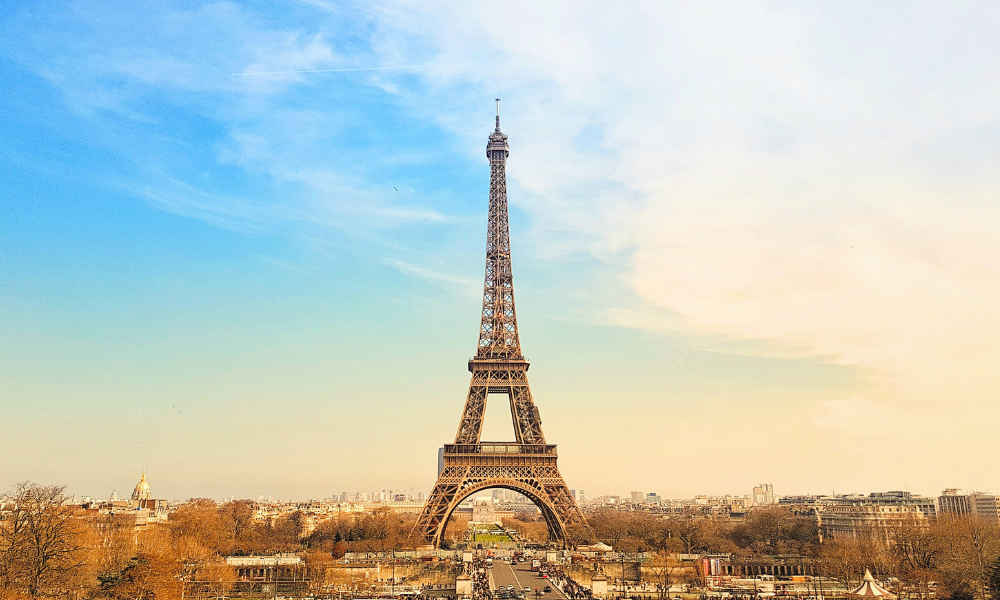
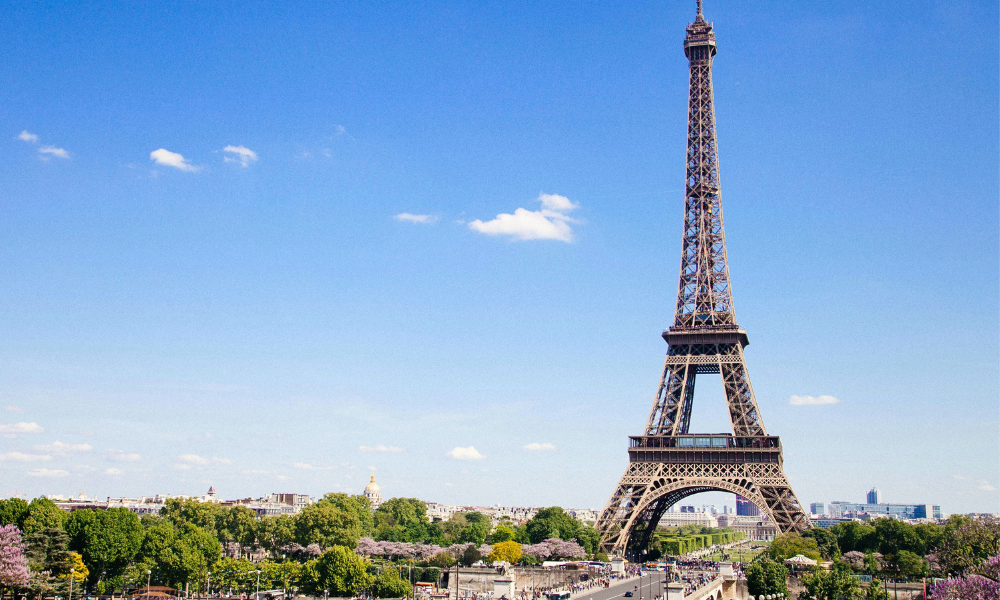
If there is a perfect way to begin a journey in the City of Light, it’s in front of the Iron Lady rising over the Champ de Mars. The Eiffel Tower is more than a monument: it’s the ultimate symbol of Paris, a poetic masterpiece. It doesn’t just appear — it welcomes you.
The Eiffel Tower is open daily, generally from 9:30 a.m. to 11:45 p.m. In summer, operating hours may be slightly extended — both elevator service and the last access to the summit are adjusted seasonally.
If you plan to go up the tower, prepare for a memorable experience: from the top, Paris opens stunningly before your eyes. At sunset, the city takes on golden tones as lights begin to sparkle — one by one — creating an indescribable feeling. [Click here to buy tickets in advance and skip the lines.]
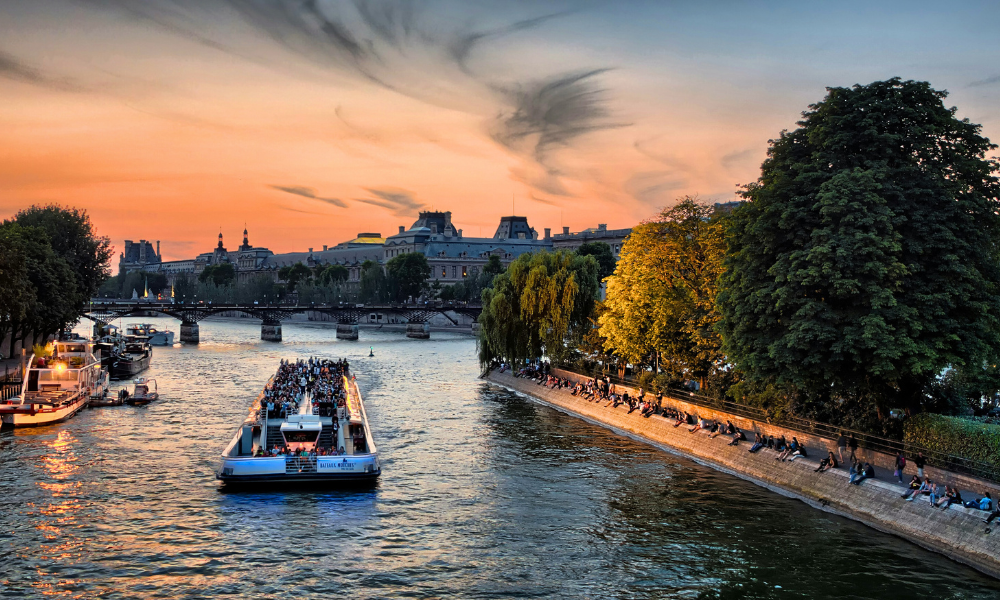
After the Eiffel Tower, one of the day’s most memorable experiences is a Seine river cruise, letting Paris glide slowly before your eyes. You can take the cruise before or after visiting the tower, but there is something magical in the late afternoon: façades shine as if freshly painted, and the Seine reflects a sky seemingly made for Paris.
The cruise lasts about 1 hour, showcasing some of the city’s most iconic sights — the Eiffel Tower along the way, the elegant Musée d’Orsay, historic bridges, and the silhouette of Notre-Dame as you approach Île de la Cité. Secure your ticket in advance and experience this unique event in Paris. [Click Here]
Les Invalides — The Military Heart of France
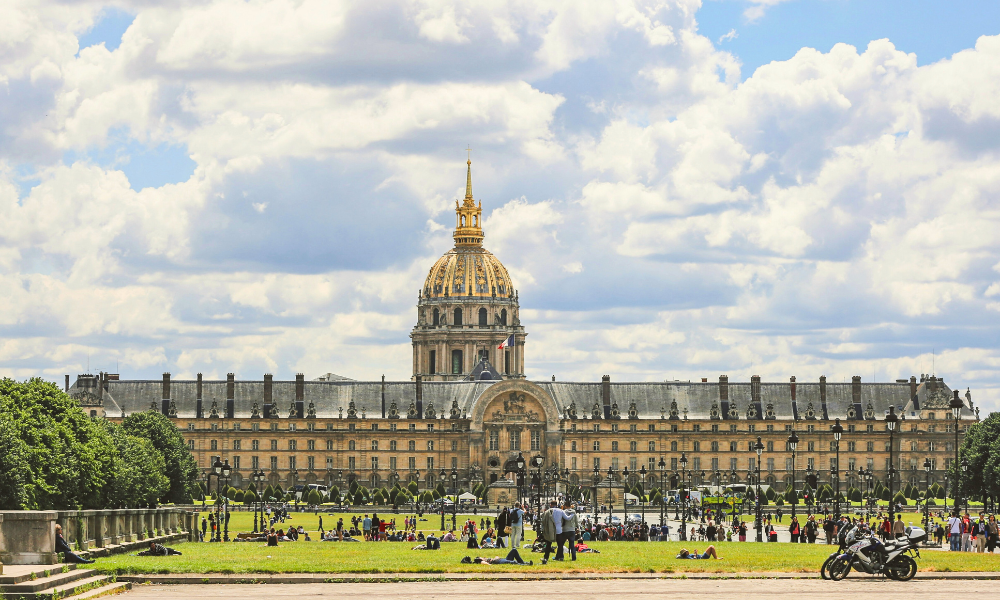
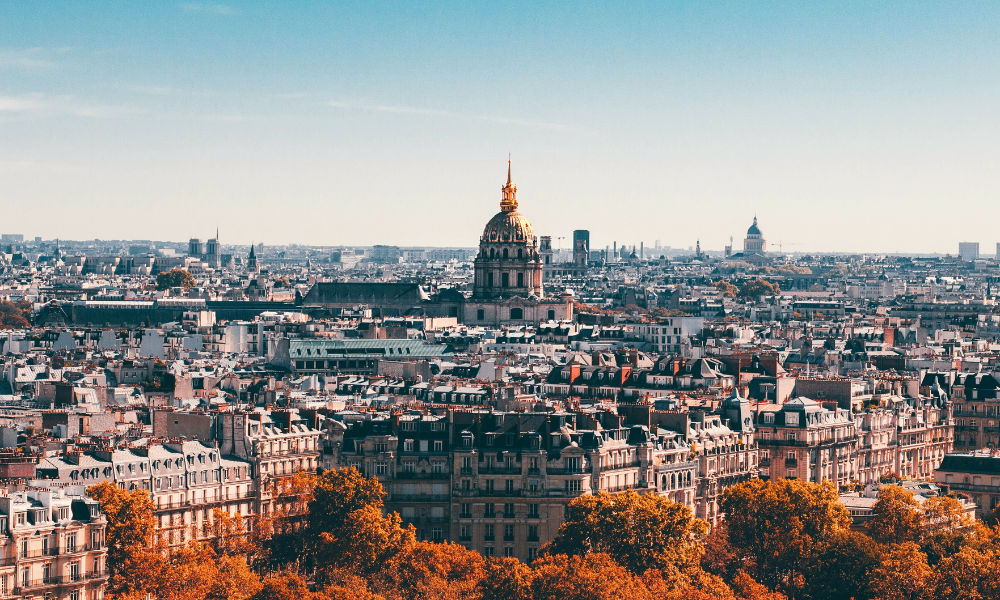
Just a few minutes’ walk from the Eiffel Tower lies the grand Les Invalides complex, home to Napoleon Bonaparte’s tomb — one of the most important historical sites in France. Built by order of Louis XIV in 1670, it was originally intended as a hospital and residence for wounded or retired soldiers. Today, besides being a fascinating monument, it houses the Musée de l’Armée, one of the largest military museums in the world.
Visiting the Cour d’Honneur and the imposing Dôme des Invalides, with its golden dome shining over the Parisian skyline, is truly remarkable. Inside, marble, bronze, and a solemn atmosphere make time seem to stop— a space of silence, memory, and grandeur.
Les Invalides is open daily, from 10 a.m. to 6 p.m. (April–October) and 10 a.m. to 5 p.m. (November–March). Hours may change during holidays or special events, so always check before visiting.
Book your visit here to make the most of this unforgettable experience.
If your schedule is tight, know that the exterior alone is impressive, with breathtaking architecture. Still, if you have time, entering the complex is a powerful historical immersion, especially in the Dôme des Invalides and the Army Museum.
Pont Alexandre III — Paris’ Most Elegant Bridge
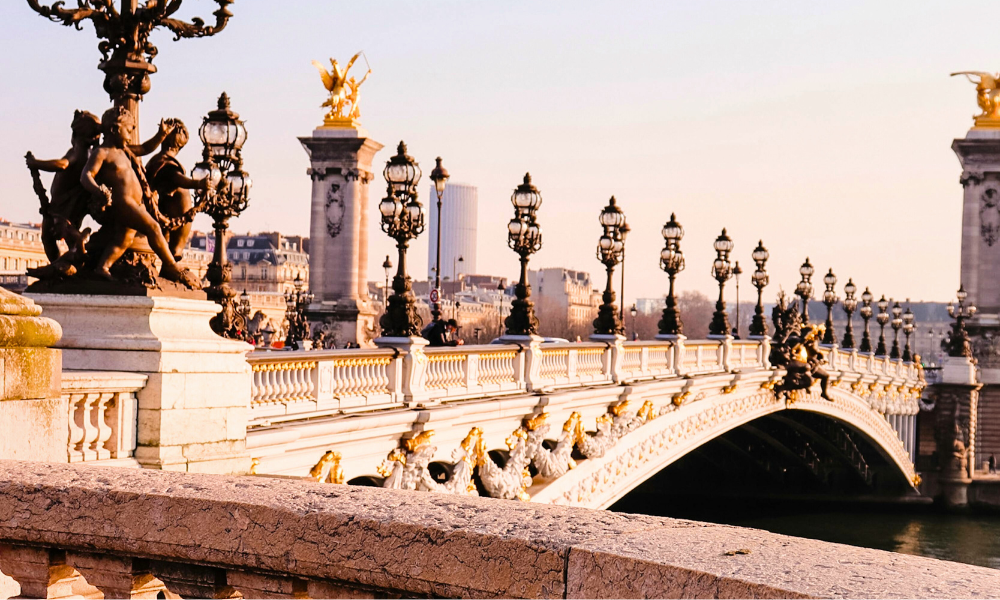
About a 15-minute walk from Les Invalides, the Pont Alexandre III awaits — one of the most photogenic and impressive settings in Paris.
Considered by many as the most beautiful bridge in the city, it truly lives up to its reputation. Opened in 1900 during the Universal Exposition, it was designed as a symbol of the alliance between France and Russia, named in honor of Czar Alexander III.
The gold details and monumental sculptures adorning the bridge make it seem like it was created to reflect light. At sunrise or sunset, it truly shines.
Petit Palais and Grand Palais — Parisian Gems
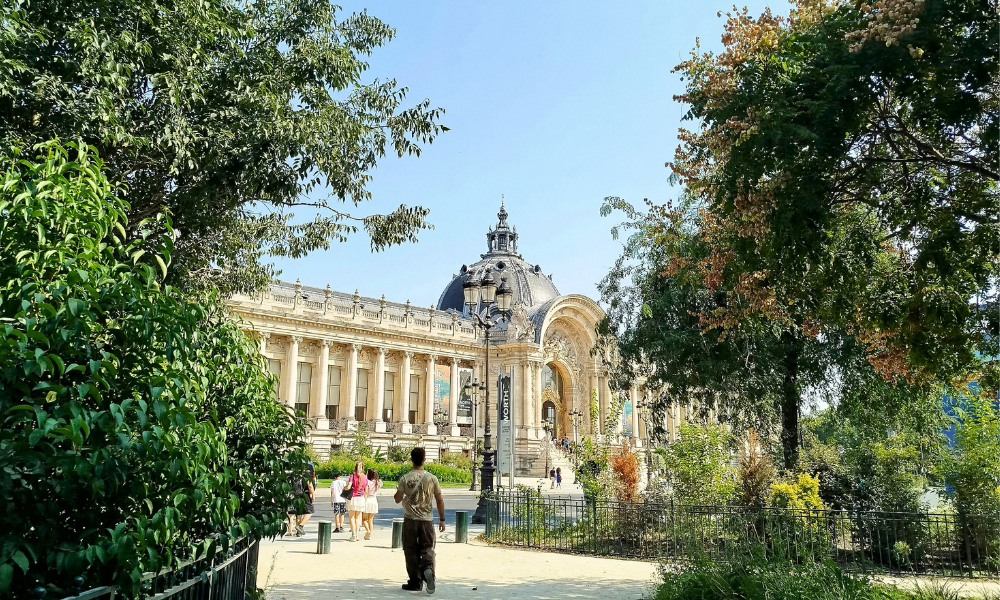
Located side by side on Avenue Winston Churchill, these two buildings form one of Paris’ most elegant architectural ensembles — a must-see for art and architecture lovers.
The Petit Palais impresses at first glance with its monumental façade and refined staircase. Today, it houses the Paris Museum of Fine Arts, featuring paintings, sculptures, decorative arts, and graphic works from antiquity to the early 20th century. The museum is open Tuesday to Sunday, 10 a.m. to 6 p.m., closed on Mondays. Many visitors enter the Petit Palais just to admire the inner courtyard with columns and garden — a hidden, free, and utterly charming gem.
Next door, the Grand Palais is a true icon of early 20th-century Parisian architecture. Its impressive iron, glass, and stone structure was innovative for its time. Originally designed for art exhibitions, fairs, and major cultural events — and even car races — it remains a symbol of the city. Today, the Grand Palais primarily hosts temporary exhibitions and events.
For detailed visitor information, opening hours, and ticket options, please consult the official Petit Palais and Grand Palais websites.
Champs-Élysées and Arc de Triomphe — Between History and Glamour
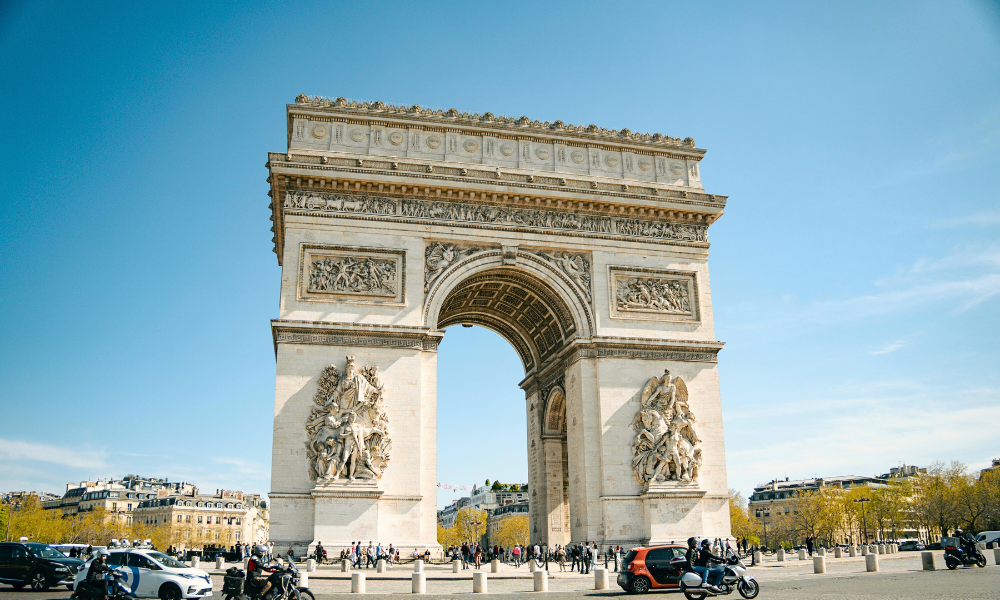
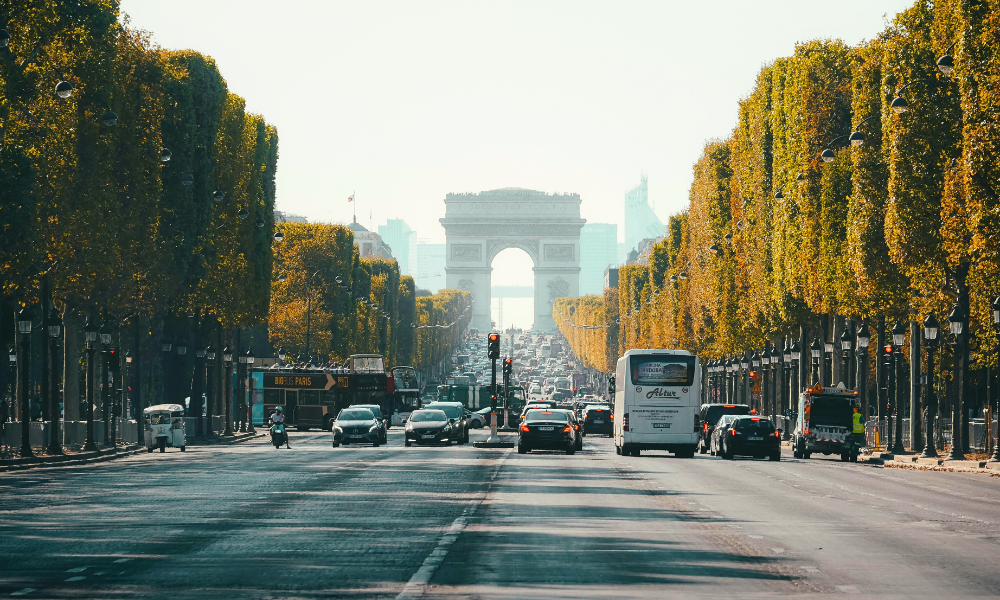
The Avenue des Champs-Élysées is one of the most famous avenues in the world, celebrated for its unique charm, elegant shops, iconic cafés, and vibrant atmosphere. Stretching from Place de la Concorde to the majestic Arc de Triomphe, it invites you to stroll at leisure, observe city life, and absorb Parisian essence.
At the end of the avenue rises the Arc de Triomphe, one of Paris’ most imposing monuments. Built to honor French soldiers who fought in the Napoleonic Wars, it occupies the center of Place Charles de Gaulle and offers one of the most impressive panoramic views of the city from its terrace — with twelve avenues radiating like spokes from the monument.
Interesting facts:
- It houses the Tomb of the Unknown Soldier, where an eternal flame honors French fighters who died in World War I.
- Although inaugurated in 1836, its construction took almost 30 years to complete.
Walking the Champs-Élysées to the Arc de Triomphe is more than just touring a famous avenue — it’s feeling Paris in every detail, from the glittering shop windows to the ebb and flow of Parisians and the centuries of history etched into every stone.
Day 2 — Louvre, Tuileries, and Orsay: Art Everywhere You Look
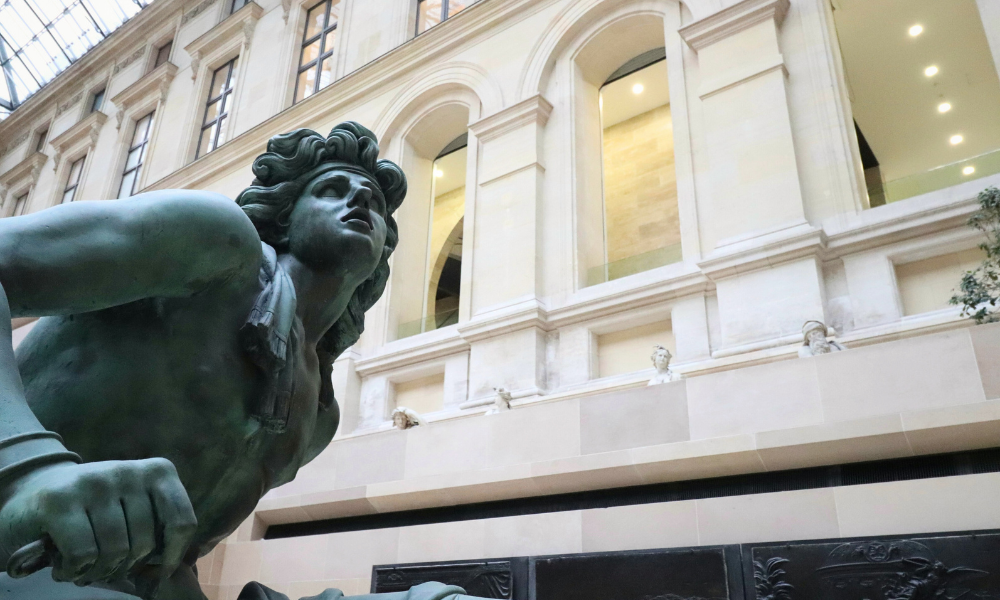
This day is dedicated to culture in its grandest form. Two of the world’s greatest museums, a historic garden, and a square brimming with symbolism connect along one of Paris’ most important cultural axes — where art, heritage, and scenery constantly engage in a dialogue.
Louvre Museum — Where Art Breathes Grandeur
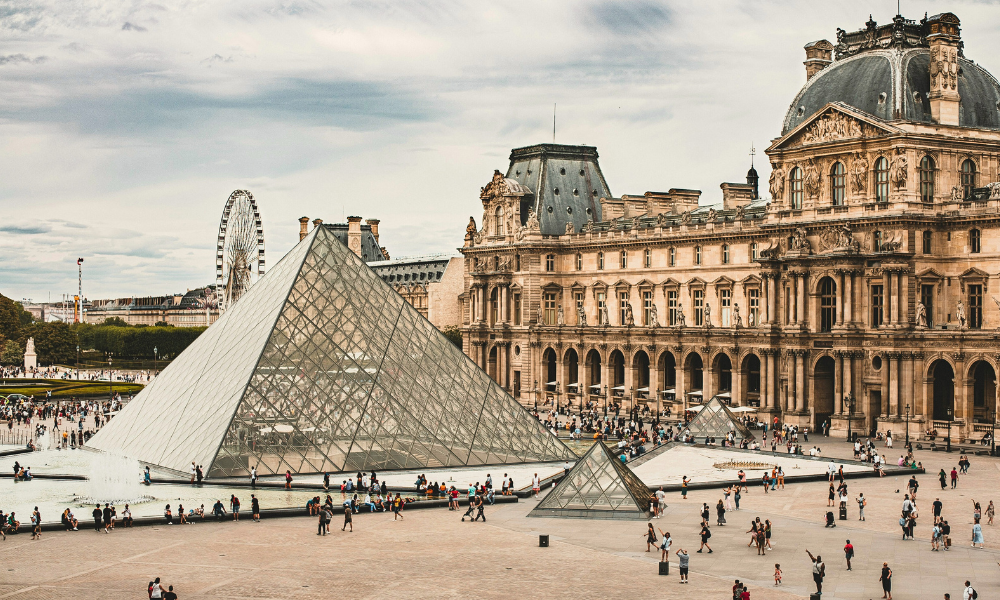
Located in the heart of Paris, the Louvre Museum is one of the most famous and visited museums in the world. Its origins date back to 1190, when it was built as a fortress under the reign of Philip II. Over the centuries, the building underwent major transformations: it became a royal palace and, after the French Revolution, opened its doors to the public as a museum in 1793.
Today, the Louvre houses a monumental collection of over 380,000 works, featuring paintings, sculptures, Egyptian and Greco-Roman antiquities, and pieces spanning centuries of human history — a true portrait of the world’s cultural evolution.
Among its greatest icons are Leonardo da Vinci’s enigmatic Mona Lisa, the classical Venus de Milo, and the imposing Winged Victory of Samothrace — masterpieces that together attract millions of visitors every year, making the Louvre an unforgettable experience.
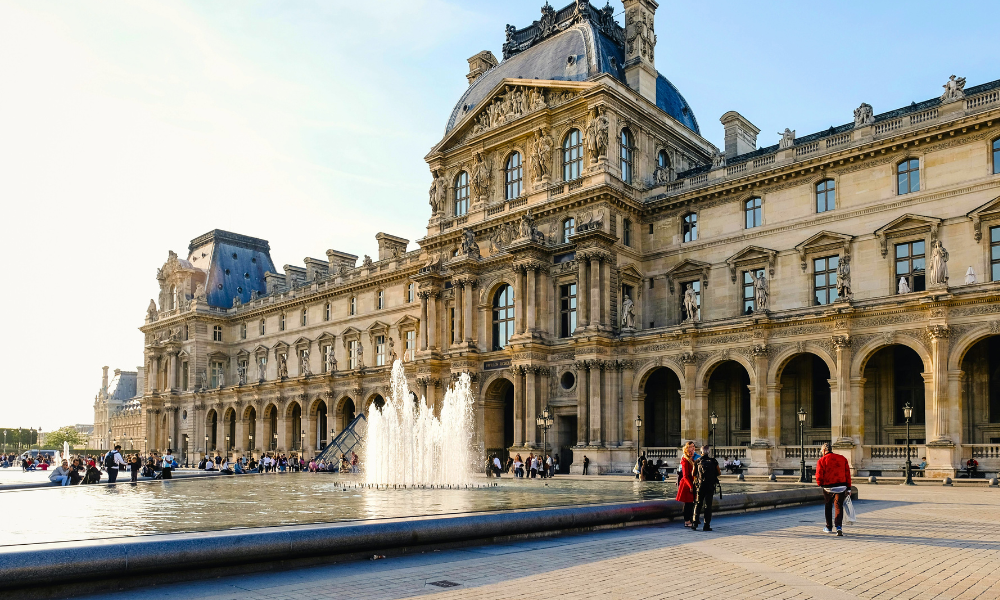
Interesting facts:
- The Louvre is the largest art museum in the world, with around 72,735 m² of exhibition space.
- During World War II, thousands of artworks were removed from the museum and hidden in French castles to protect them from looting.
- It is estimated that it would take over 100 days to see the entire collection, spending only a few minutes in each room.
The museum is open Tuesday to Sunday from 9 a.m. to 6 p.m., with extended hours on Wednesdays until 9:45 p.m. (closed on Mondays). Tickets are priced at €22.00, with free entry for visitors under 18 and EU residents under 26. For the latest information on prices and opening hours, check the official website.
If you are passionate about art and history and want to explore the Louvre thoroughly, choose a guided tour. A knowledgeable guide will show you the museum’s highlights, helping you skip the lines and make the most of your day at one of the world’s largest museums. [Click here and secure your tour.]
To visit the Louvre is to immerse yourself in human history and feeling the grandeur of centuries of culture gathered in one place. If you love art and have a longer itinerary, dedicating a full day is highly recommended.
Tuileries Garden — An Oasis of Calm and Parisian Beauty
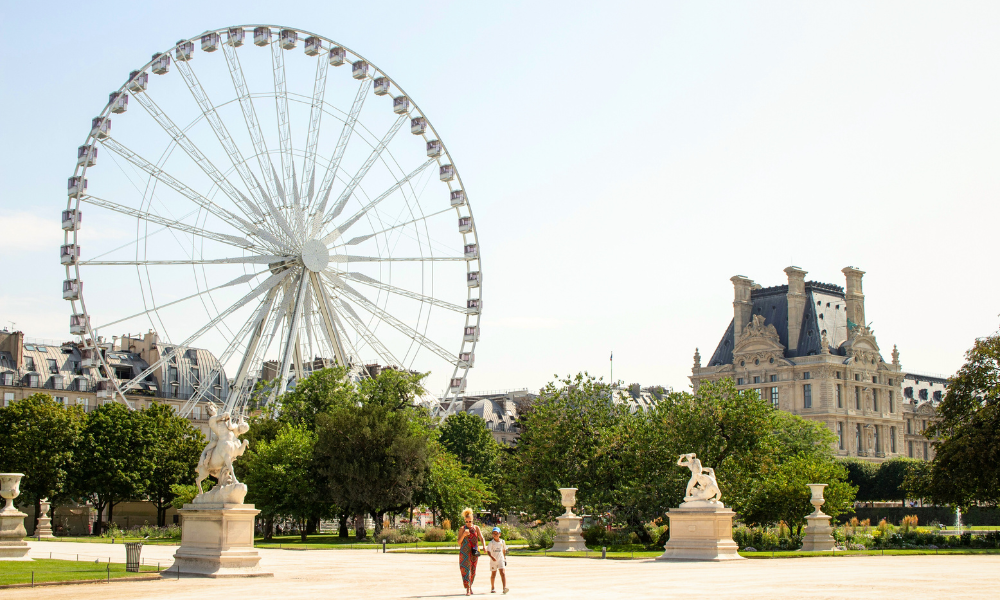
Between the Louvre Museum and Place de la Concorde, the Tuileries Garden is one of Paris’ most traditional and elegant parks. Created in the 16th century by Catherine de Medici as the garden of the former Tuileries Palace, it became public in 1667, remaining an elegant refuge amidst the city ever since.
The garden invites you to walk slowly, take a pause after the museum, or simply observe the delicate rhythm of Parisian life. Besides its beauty, the Tuileries offers prime views of both the Louvre and Place de la Concorde, making it a strategic and unmissable stop on your itinerary.
The garden is usually open from 7 a.m. to 9:30 p.m., with slight variations depending on the season.
Place de la Concorde — History, Power, and Revolution
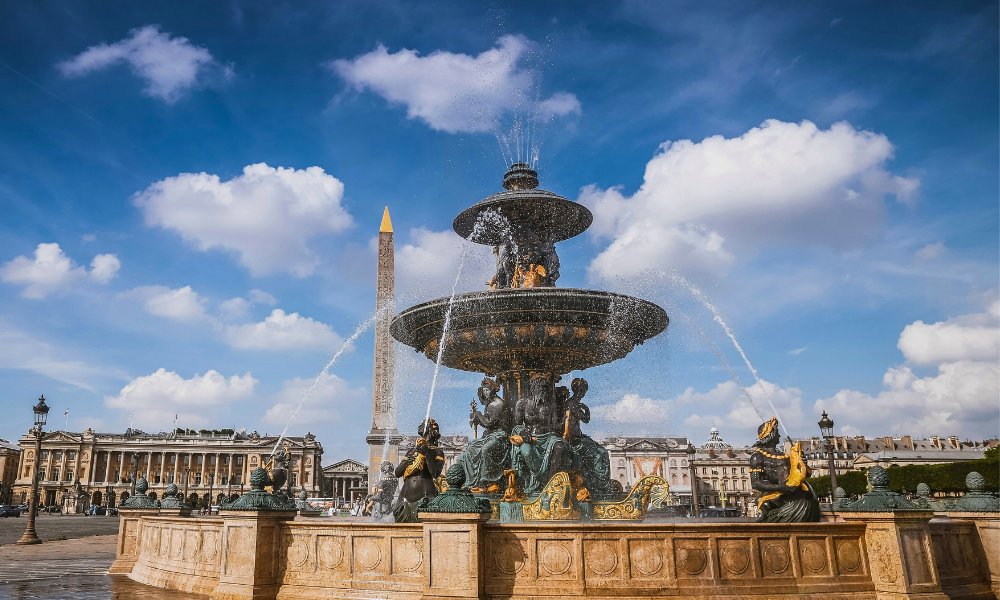
Place de la Concorde is one of Paris’ most iconic squares, located between the Tuileries Garden and the Champs-Élysées. The monumental fountains and the imposing Luxor Obelisk create a scene where beauty and history intertwine in a powerful way.
Designed in 1755 by architect Jacques-Ange Gabriel, the square was the stage for some of France’s most dramatic historical moments. During the French Revolution, it was called Place de la Révolution and housed the guillotine — including the executions of King Louis XVI and Queen Marie Antoinette.
For history lovers, walking through this square is an intense experience — one that gives you chills.
Musée d’Orsay — The Temple of the Impressionists
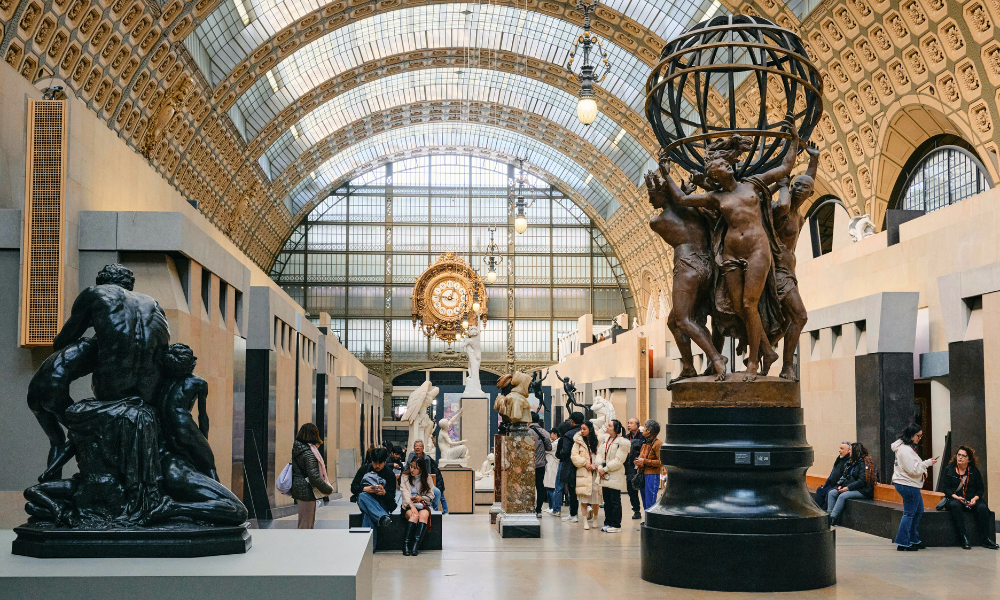
On the banks of the Seine, the Musée d’Orsay occupies the majestic building of a former railway station. Its Beaux-Arts architecture, marked by elegant use of iron, glass, and grand arches, makes the building itself a work of art.
The museum is celebrated worldwide for housing one of the most important collections of Impressionist and Post-Impressionist art. Here, names like Monet, Van Gogh, Renoir, Degas, and Cézanne come alive in spacious, light-filled rooms, showcasing one of the most poetic, sensitive, and revolutionary periods in art history.
Beyond the iconic paintings, the Orsay captivates with the way natural light floods the space, especially at the famous giant clock, offering stunning views of Paris.
The museum is open Tuesday to Sunday from 9:30 a.m. to 6 p.m., with extended hours on Thursdays until 9:45 p.m. (closed on Mondays). Entry to the Musée d’Orsay is free for visitors under 18 and for EU residents under 26.
Day 3 — Île de la Cité and the Latin Quarter: The Birthplace of Paris
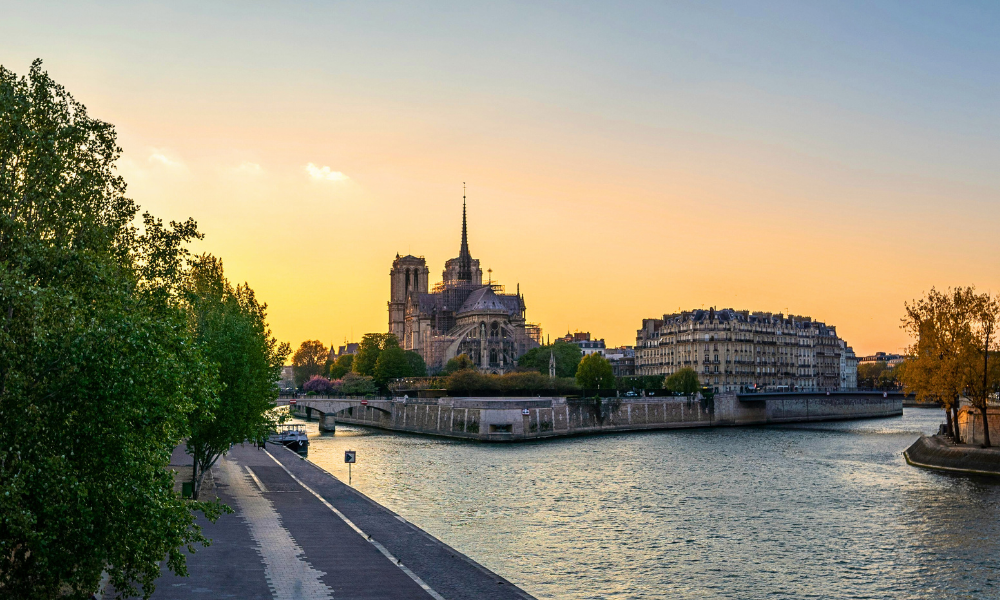
This is one of the most meaningful days of the itinerary. Here, Paris reveals itself in ancient, quiet, and deeply layered forms. You’ll walk through the origins of the city, surrounded by medieval streets, Gothic architecture, and bridges that span centuries. This is where you truly step into Paris’ living memory.
Pont Neuf — The Oldest Bridge in Paris
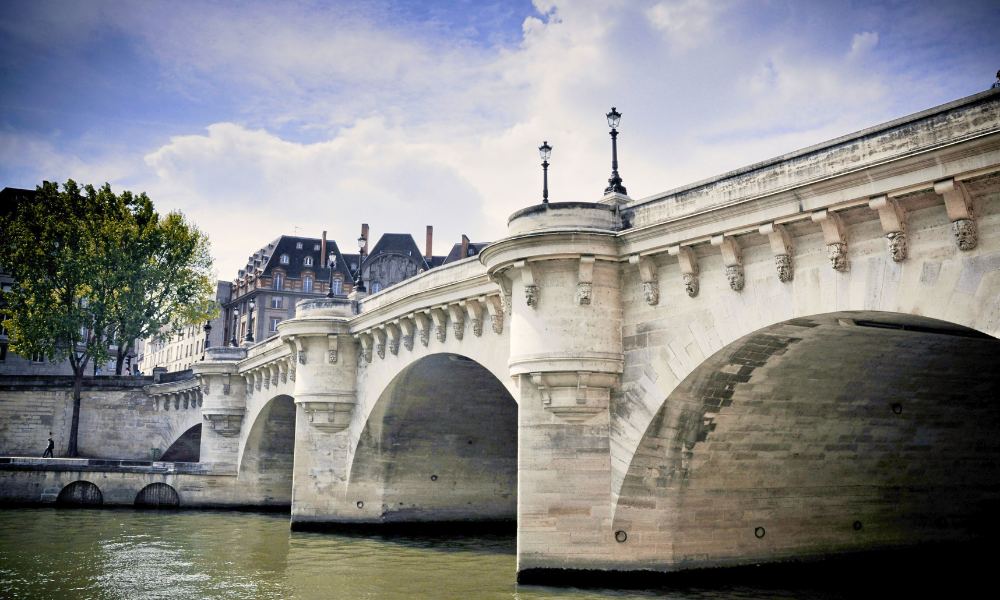
The oldest bridge in Paris marks the gateway to the Île de la Cité, connecting riverbanks and centuries of history. Construction began in 1578, during the reign of Henry III, and was completed in 1607 under Henry IV.
Revolutionary for its time, Pont Neuf was the first Parisian bridge built without houses on top of it — a bold decision that reshaped how the city related to its urban space. The result was more light, better circulation, and wide, unobstructed views of the River Seine, something unimaginable until then.
Today, it’s the perfect place to start the day slowly: watching the river flow, feeling the city awaken, and letting Paris unfold gently with each step and golden reflection on the water.
Conciergerie + Sainte-Chapelle — Between the Power of Law and the Beauty of Faith
Just a few steps apart, these two monuments reveal opposing sides of French history: the dark weight of the Revolution and the almost divine light of medieval Gothic art.
Conciergerie
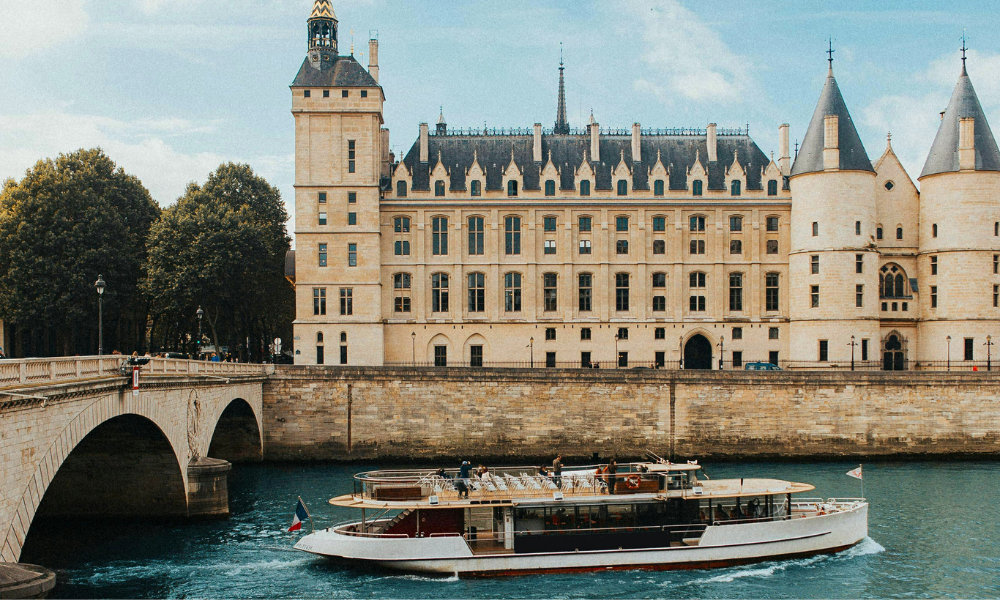
Originally part of the medieval royal palace of the French kings, the Conciergerie later became infamous as one of the most feared prisons of the French Revolution.
It was here that many prisoners awaited trial — or, more often, their inevitable path to the guillotine.
The most famous prisoner was Marie Antoinette, who spent her final days in this building before her execution in 1793.
Interesting facts:
- The building preserves monumental Gothic halls, including the impressive Hall of the Guards.
- Marie Antoinette’s cell can be visited — later reconstructed as a memorial.
- During the Revolution, the Conciergerie was known as the “antechamber of death.”
It is generally open daily from 9:30 a.m. to 6 p.m.
Sainte-Chapelle
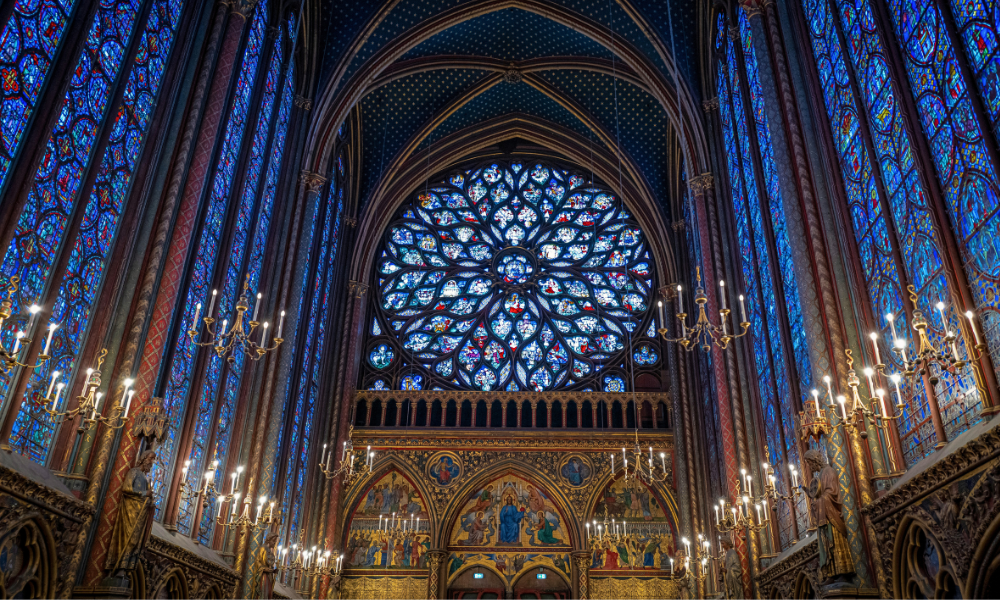
Built in the 13th century by order of King Louis IX (Saint Louis), Sainte-Chapelle was designed to house sacred relics, including the renowned Crown of Thorns of Christ.
It is considered one of the most extraordinary masterpieces of European Gothic architecture — not for its size, but for the way architecture melts into light.
Highlights:
- Features 15 monumental stained-glass windows, illustrating over 1,100 biblical scenes.
- Around 70% of the structure is made of glass, a remarkable technical feat for its time.
- On sunny days, the interior becomes a breathtaking spectacle of colored light, creating one of Paris’ most unforgettable visual experiences.
Opening hours are usually 9 a.m. to 7 p.m., varying by season.
Notre-Dame Cathedral — A Symbol of Faith and French Heritage
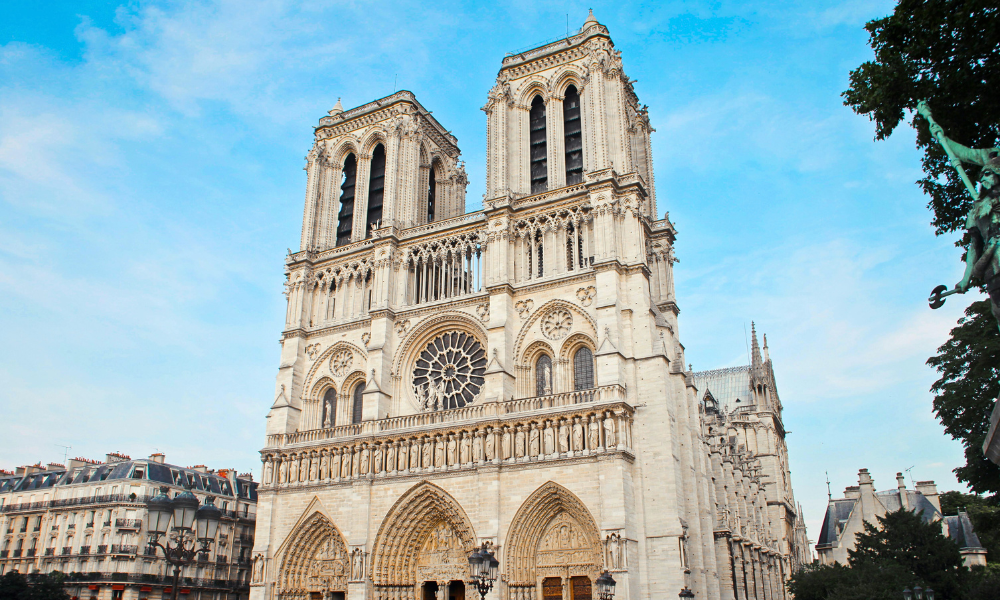
Construction of Notre-Dame Cathedral began in 1163, during the reign of King Louis VII, and spanned nearly two centuries, concluding around 1345. Stone by stone, the cathedral rose, growing alongside the essence of France, becoming the setting for coronations, solemn ceremonies, moments of glory, and profound sorrow.
On the night of April 15, 2019, a devastating fire damaged the cathedral, deeply moving people around the world. Since then, Notre-Dame has undergone a meticulous restoration process, also becoming a modern symbol of resilience, memory, and historic preservation.
The cathedral reopened to the public in 2024, allowing visitors once again to admire its grandeur up close.
Entrance to the main nave of Notre-Dame Cathedral is free, with a free timed reservation required via the official website or app. Only specific areas require a paid ticket, such as the towers, the archaeological crypt, and certain special sections (like the Treasury), each with separate admission.
A 12-minute walk from Notre-Dame brings you to the Pont des Arts.
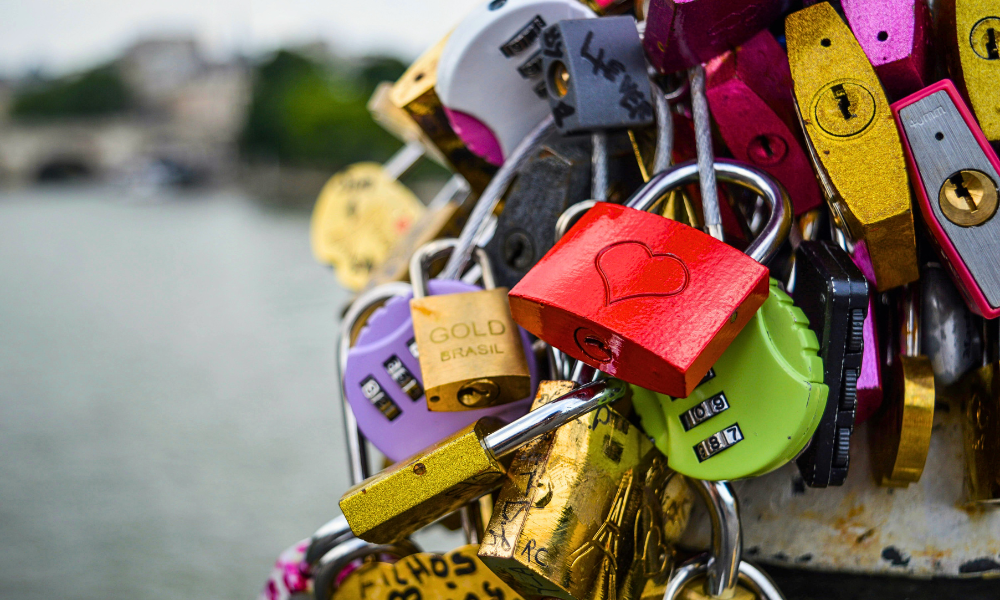
For years, the Pont des Arts was covered with thousands of love locks, left by couples as promises suspended above the Seine. This simple gesture turned the bridge into one of the most romantic symbols of contemporary Paris. In 2015, the locks were removed for safety reasons after their weight compromised the structure. Even so, the bridge remains an invitation to pause, reflect, and embrace the memories Paris effortlessly evokes.
Explore the Latin Quarter. Walking through those streets is a journey to the intellectual roots of Paris. Its narrow medieval streets hide centuries-old bookstores and cafés where writers such as Ernest Hemingway, Simone de Beauvoir, and Jean-Paul Sartre once found inspiration. Every corner invites a poetic pause.
Take the opportunity to visit Shakespeare and Company, an iconic bookstore loved by travelers from around the world.
Enjoy a traditional coffee on a quiet side street, away from the busiest tourist areas.
Panthéon — Where Science, Art, and History Converge
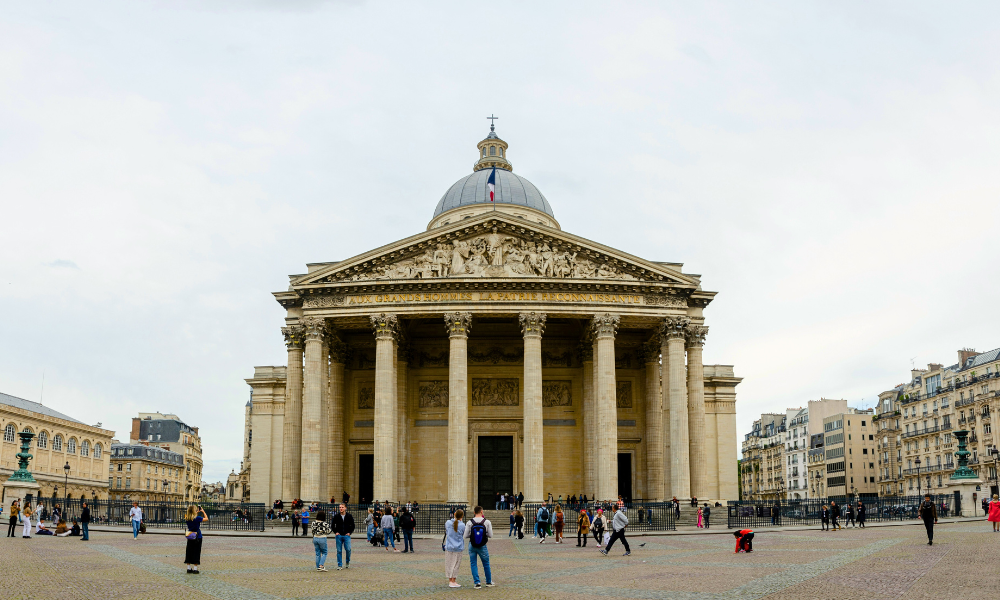
The Panthéon is one of Paris’ most impressive monuments. It is the final resting place of figures such as Victor Hugo, Jean-Jacques Rousseau, and Marie Curie, and its dome offers one of the most beautiful panoramic views of the city.
Commissioned by King Louis XV in the 18th century as a church dedicated to Saint Genevieve, patron saint of Paris, construction began in 1758 and was completed in 1790. After the French Revolution, the building was transformed into a secular mausoleum, honoring France’s greatest minds. It later alternated between religious and civic functions before becoming the national Panthéon.
The Panthéon is open daily from 10 a.m. to 6 p.m. (hours may vary by season). Panthéon Paris tickets cost around €14 and can be purchased in advance by clicking here to avoid lines and secure your visit.
Free admission is available for visitors under 18 (all nationalities), EU citizens under 25, and people with disabilities plus one companion.
End the day with a stroll through the Luxembourg Gardens, where colorful flowers, elegant statues, and green metal chairs invite moments of calm. Locals gather here to read, chat, or simply watch life go by.
Day 4 — Montmartre, Sacré-Cœur, and the Artists’ Paris
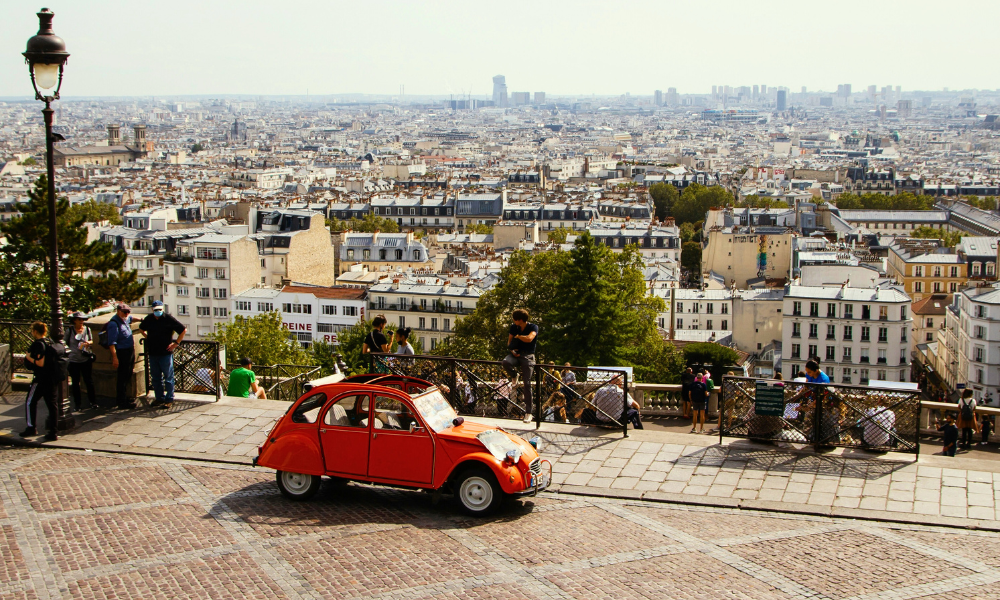
Paris is also bohemian and creative. Montmartre is the perfect stage for this artistic soul, where streets, cafés, and former studios tell centuries of stories shaped by art, encounters, and inspiration.
Here, every view is a reminder that Paris has always been a refuge for those who create, dream, and observe the world with sensitivity. Montmartre doesn’t rush — it invites you to slow down, look closer, and feel the city through its artistic pulse.
Sacré-Cœur Basilica — Paris at Your Feet
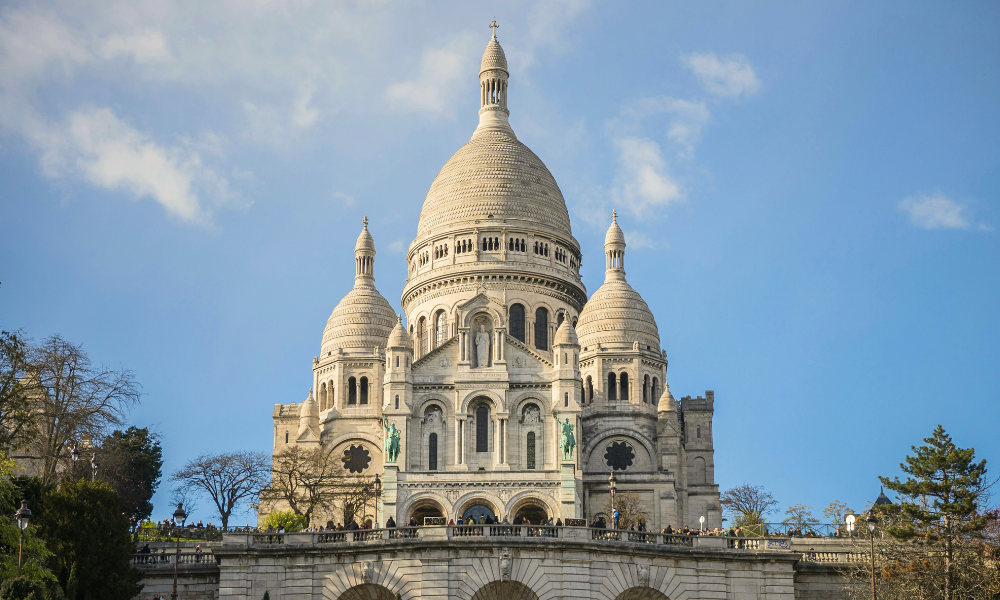
The climb up to the Sacré-Cœur Basilica can be demanding, but the reward is worth every step. From the top of Montmartre hill, a breathtaking panoramic view of Paris unfolds before you, offering a moment of true contemplation.
The basilica was built between 1875 and 1914, during a period of profound change in France following the Franco-Prussian War and the Paris Commune. Its construction was conceived as an act of reconciliation and faith, symbolizing the nation’s devotion to the Sacred Heart of Jesus.
Curiosities:
- During World War I, the basilica’s domes were used as military observation points.
- The crypt houses relics and memorials honoring historical figures and events connected to French religious history.
> Arrive early to avoid crowds.
> Don’t miss the dome — the view from the top is even more impressive.
Just steps away from the basilica, Place du Tertre is a celebration of living art. Painters and caricaturists display their work in the open air while visitors and locals stroll through the square. Tourist-friendly, yes — but undeniably charming for anyone who loves the artistic world.
Pigalle and Moulin Rouge — Bohemia and Spectacle
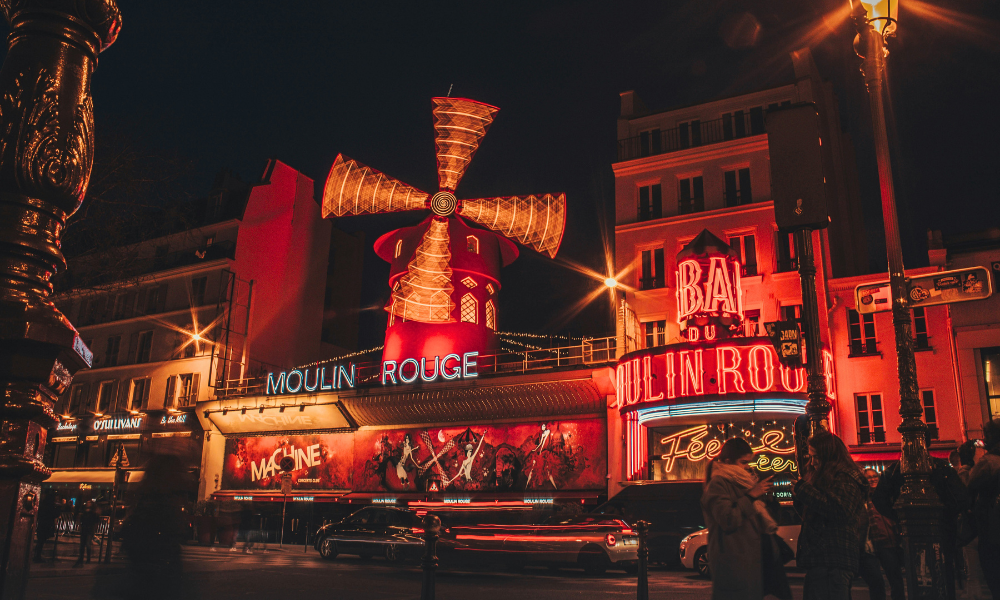
At the foot of the hill, Montmartre shifts mood. Pigalle lights up with bars, neon signs, and a bohemian energy that made the Moulin Rouge world-famous. Taking a photo in front of its iconic red windmill is almost mandatory — but attending a nighttime show is an unforgettable experience.
The Moulin Rouge opened in 1889, the same year as the Universal Exhibition and the Eiffel Tower. It quickly became a meeting place for artists, writers, and aristocrats, drawn by its bold and innovative spirit.
It was here that the French cancan gained international fame, becoming the venue’s signature dance — a vibrant blend of energy, color, and tradition that still defines the show today.
> The Moulin Rouge is one of the most sought-after shows in Paris, and tickets often sell out quickly. We strongly recommend booking in advance — click here to secure your tickets and avoid disappointment.
> Explore the surrounding bars and cafés before the performance to soak up the neighborhood’s atmosphere.
Day 5 — Le Marais, Opéra Garnier, and Galeries Lafayette
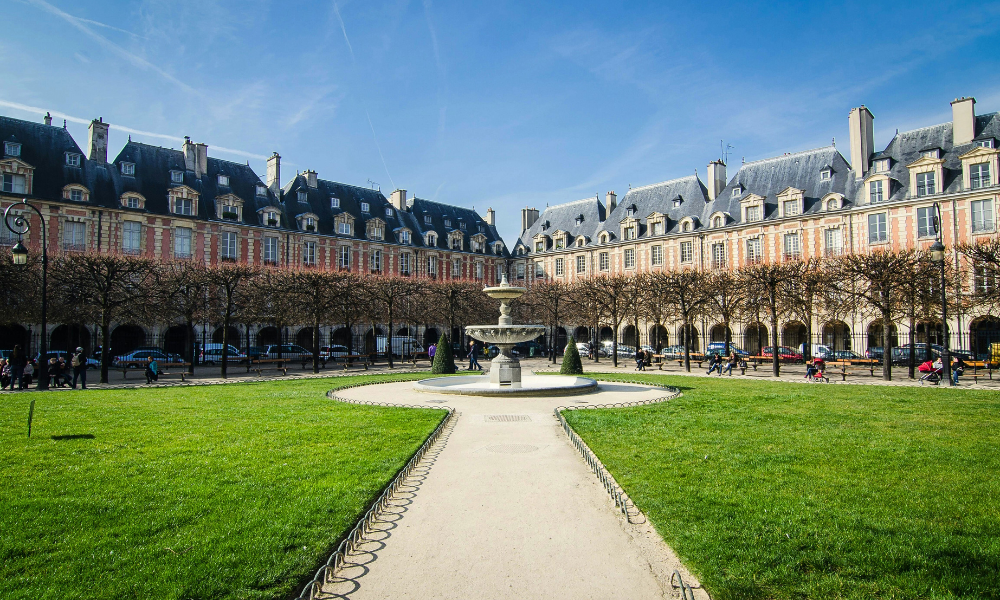
This is a light and leisurely day, shaped by small delights and quiet discoveries.
Between historic streets, elegant façades, and shop windows reflecting the present, you’ll explore a Paris that balances tradition and modernity with effortless grace.
Le Marais — cobblestone streets and hidden charm
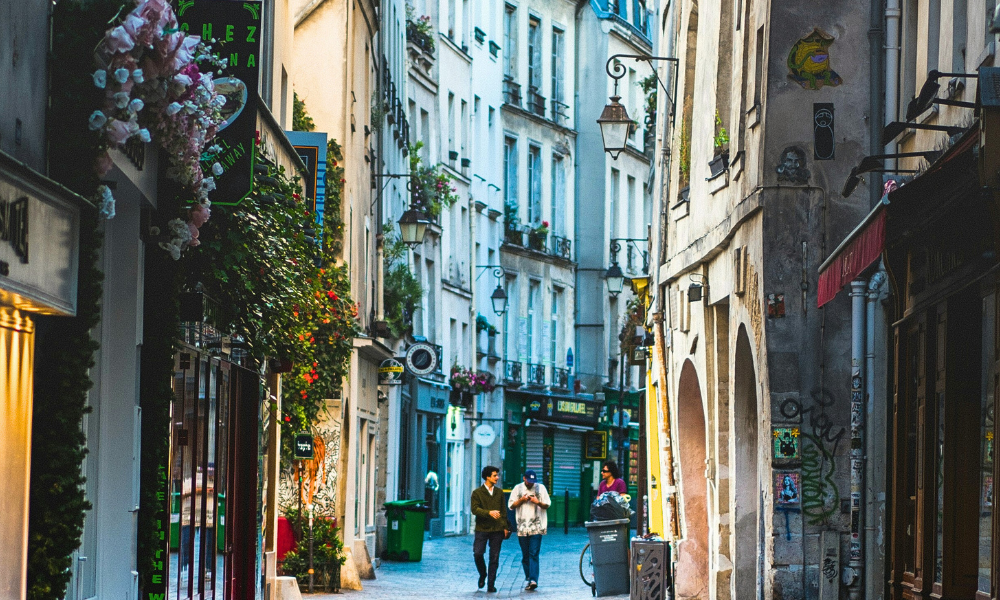
Begin your exploration in the heart of Le Marais, one of Paris’ most historic and picturesque neighborhoods. Wander through Place des Vosges, the oldest square in the city. Surrounded by symmetrical façades, red-tiled roofs, and shaded gardens, it offers a serene spot for a contemplative pause. Take a moment to stroll, read, or simply admire the classical architecture — a perfect introduction to the timeless elegance of this quarter.
From here, lose yourself in the narrow cobblestone streets of Le Marais. Rue des Rosiers, the historic Jewish quarter, is alive with cafés, bakeries, and vibrant boutiques. Colorful façades, inviting shop windows, and small galleries make every corner a photo opportunity. This is Paris at its most authentic: a blend of history, culture, and contemporary flair.
Opéra Garnier — splendor, art, and mystery
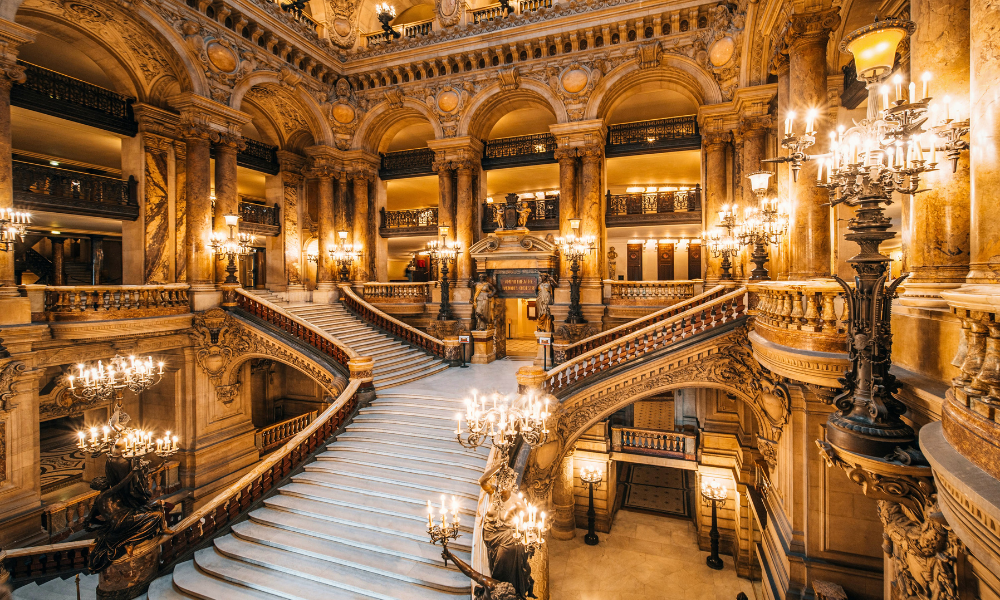
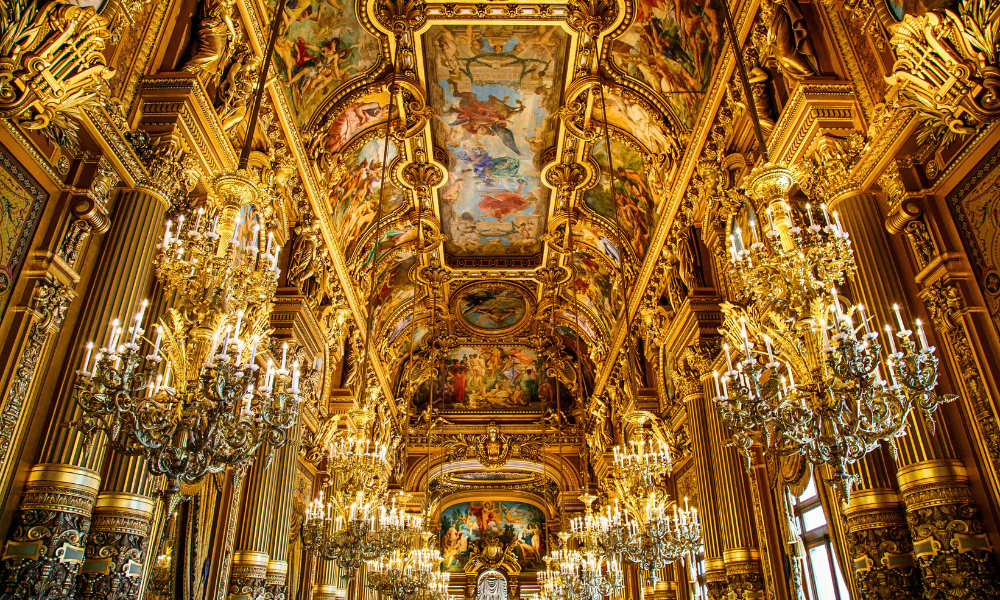
The Opéra Garnier is one of the most spectacular buildings in Paris, a true symbol of 19th-century grandeur and luxury. Located in the Opéra district, the building inspired Gaston Leroux’s famous novel The Phantom of the Opera and impresses visitors from its ornate façade to its gilded interiors, which feel straight out of a royal palace.
Construction began in 1861, during the reign of Napoleon III, as part of Baron Haussmann’s ambitious plan to modernize Paris. The young architect Charles Garnier won the design competition, lending his name to the masterpiece inaugurated in 1875, now an icon of eclectic architecture and French cultural prestige.
Fascinating facts:
- Beneath the stage lies an underground lake, which inspired the legend of the Phantom of the Opera.
- One specific seat was “reserved” for years for the supposed phantom of the theater.
- It is considered one of the most beautiful opera houses in the world, renowned for its cinematic grand staircase and lavish golden décor.
> Explore the Opéra Garnier at your own pace, admiring its grand staircase, ornate halls, and stunning architectural details. [Click here to skip lines]
> Check performance schedules—even if just to access the main hall and soak in the atmosphere.
Galeries Lafayette — Paris from Above, Light, and Elegance
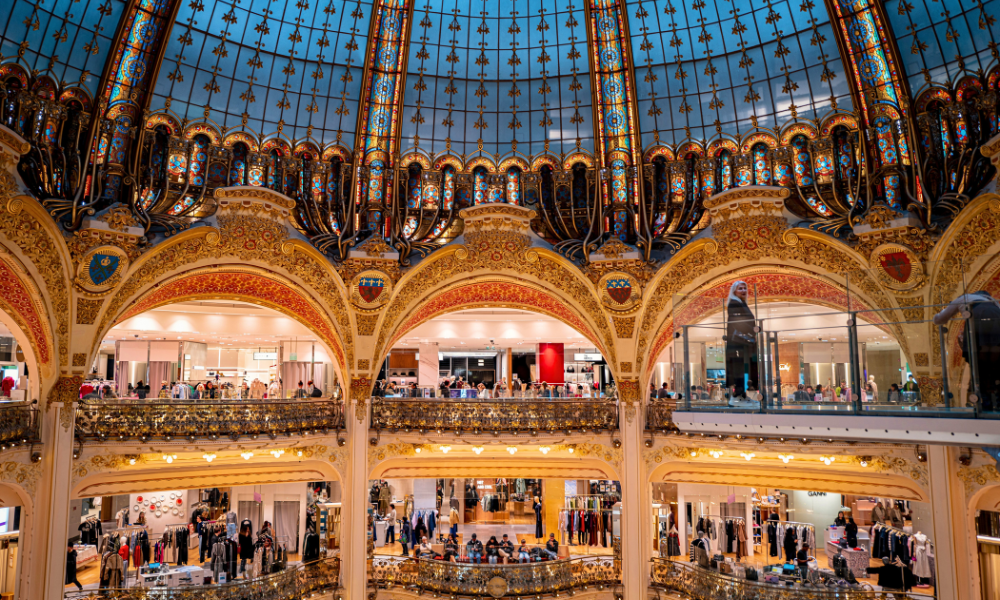
Visiting the Galeries Lafayette is an encounter with Parisian elegance and striking architecture.
Located just steps from the Opéra Garnier, this iconic department store has been a symbol of Parisian luxury since 1894. Even for those with no intention of shopping, the building itself is reason enough to step inside. The moment you enter, your eyes are naturally drawn upward, toward the magnificent glass dome — an Art Nouveau masterpiece that fills the space with natural light and color.
As you move through the floors, you’ll find an exquisite mix of French and international brands, from haute couture to beauty, accessories, and gourmet specialties. But the true highlight awaits above.
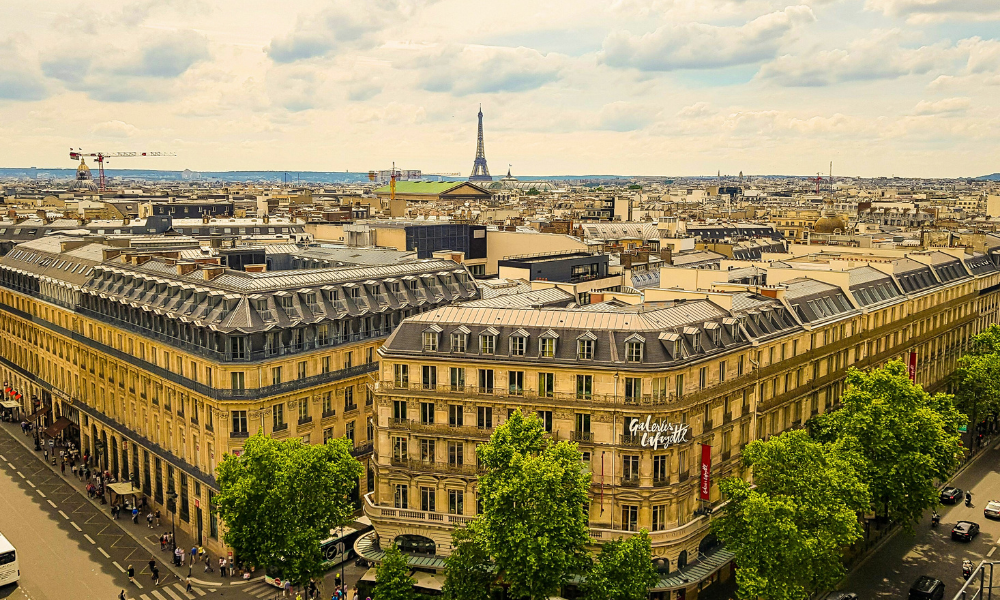
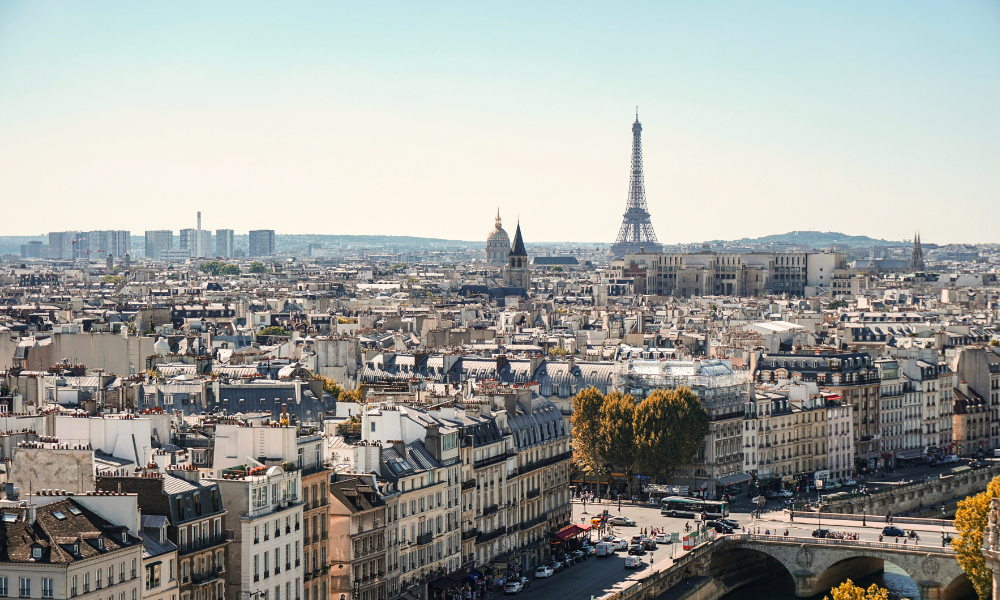
Head to the free rooftop terrace, one of the most breathtaking viewpoints in Paris. From here, the city unfolds in perfect harmony: the Opéra Garnier below, the Eiffel Tower shimmering in the distance, Montmartre rising softly on the horizon. It’s a place to pause, breathe, and take it all in — a quiet moment of beauty high above the movement of the city.
If time allows, stop at one of the cafés inside the store or explore the gourmet section, where French flavors, chocolates, pastries, and delicacies make perfect souvenirs — or small indulgences for the journey.
Bonus — Attractions to fit in based on your time and curiosity
Palace of Versailles
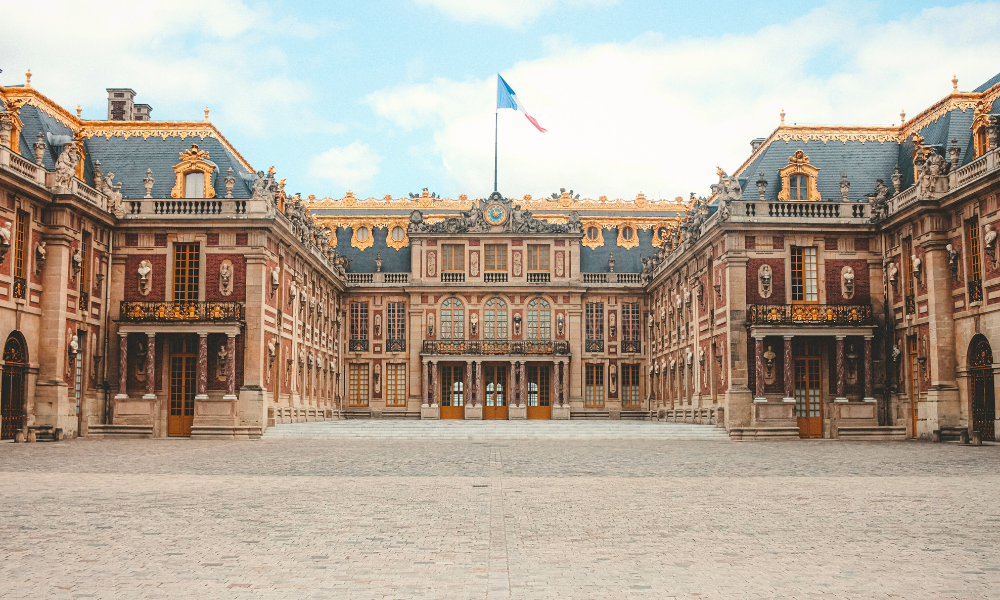
The Palace of Versailles is much more than an architectural landmark; it is a powerful symbol of France’s grandeur, art, and history. Located about 20 km from Paris, the palace began in the 17th century as a modest hunting lodge for King Louis XIII, before being transformed by his son, Louis XIV — the Sun King, into a monumental palace that reflected the absolute power of the French monarchy.
A breathtaking interior
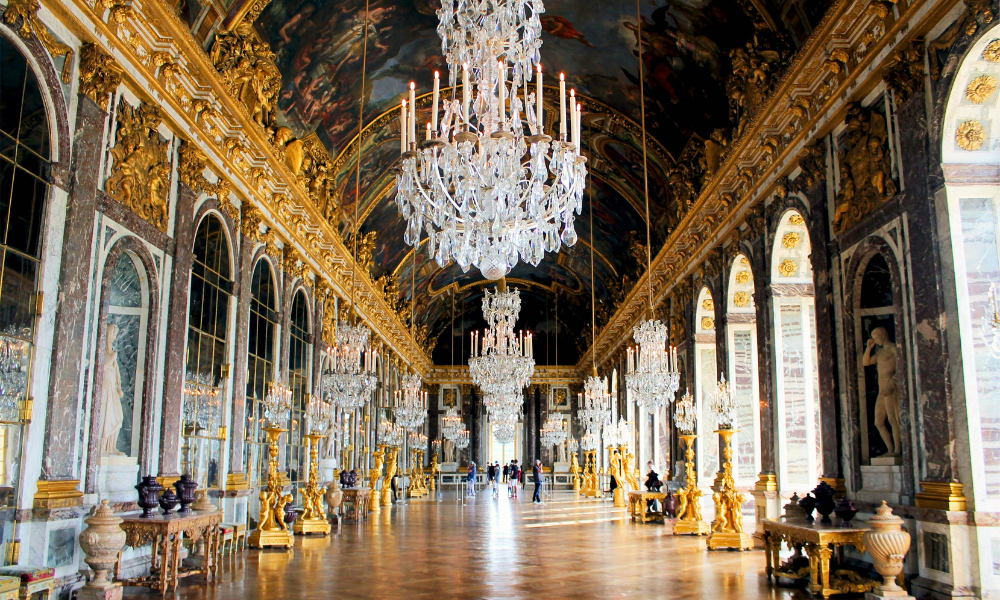
From the moment you step inside, you are surrounded by Baroque splendor: gilded halls, ceilings painted with mythological scenes, and lavish furnishings. The Hall of Mirrors is the crown jewel, with its 17 mirrored arches reflecting natural light and the perfectly symmetrical gardens beyond. Every detail—from chandeliers to ornamental moldings—was designed to impress and reaffirm royal authority.
Fascinating facts:
- The palace has more than 2,300 rooms and 67 staircases, each carrying its own story.
- The Hall of Mirrors hosted official receptions and grand celebrations and witnessed historic moments, including the signing of the Treaty of Versailles in 1919.
- The gardens were designed by André Le Nôtre, featuring fountains, statues, and geometric pathways stretching across nearly 800 hectares.
- Versailles includes the Grand Trianon and Petit Trianon, smaller palaces used by kings and queens for more private moments—most notably Marie Antoinette, who sought refuge from the formality of court life.
The gardens — a living work of art
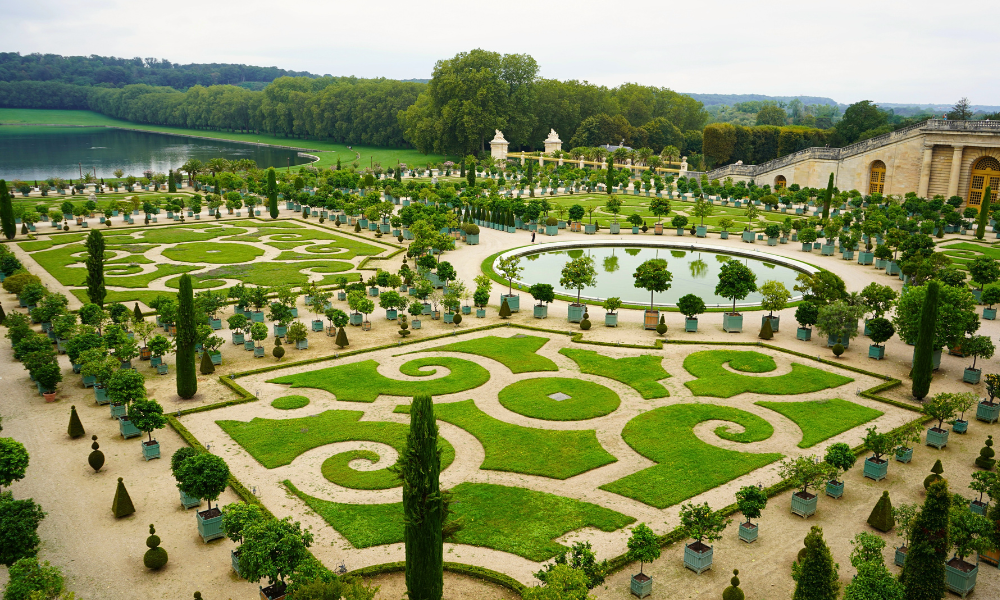
The Gardens of Versailles are just as impressive as the palace itself. With majestic fountains, canals, and carefully sculpted groves, walking through them feels like stepping into a living painting. On specific days, the fountains come alive during musical water shows, turning the gardens into a true spectacle.
> Book your tickets in advance [Click Here] — Versailles is extremely popular, and tickets often sell out.
> Arrive early to enjoy both the palace and gardens before peak crowds.
> Visit during fountain show days, when the gardens truly come alive.
> Explore the Grand and Petit Trianon to discover the more intimate side of royal life.
> Bring water and wear comfortable shoes — the grounds are vast and meant to be explored slowly.
How to get to the Palace of Versailles — main options
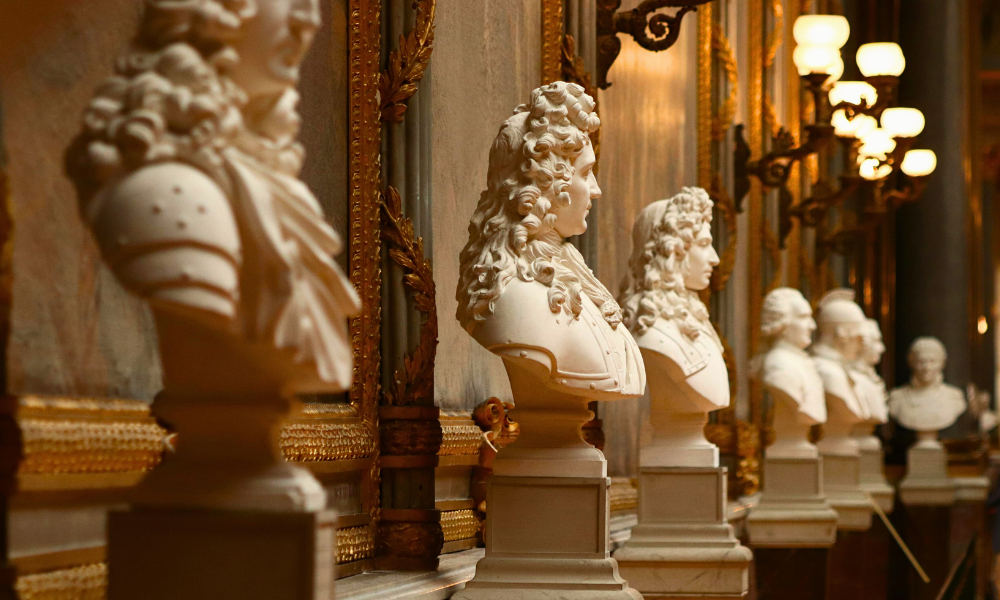
Visiting the Palace of Versailles is like traveling back in time, and getting there is easier than you might expect. Here are the main transportation options from Paris:
RER C — the most popular option: Depart from stations such as Musée d’Orsay, Invalides, Champs de Mars, or Pont de l’Alma, heading to Versailles Château Rive Gauche. Travel time is approximately 35–40 minutes, with frequent trains throughout the day. From the station to the palace its about a 10-minute walk through charming streets that already hint at Versailles’ grandeur. Perfect for those seeking speed and direct access with minimal hassle.
SNCF Train — Line N: Depart from Paris Montparnasse to Versailles Chantiers. Travel time ranges from 15 to 25 minutes, depending on the train. From the station to the palace its about 20 minutes by bus or taxi, or 30 minutes on foot, through quiet residential neighborhoods. Ideal for travelers looking for a fast, direct route from Montparnasse.
Bus 171: Departs from Pont de Sèvres (Metro Line 9) to Place d’Armes, near the palace. The journey takes 30–45 minutes, depending on traffic. From the stop, the palace is just a short walk away, allowing you to enjoy the surroundings as you approach. Perfect for those who prefer a more scenic, relaxed ride.
> Buy round-trip tickets in advance to save time.
> Avoid peak hours whenever possible for a smoother journey.
Disneyland Paris
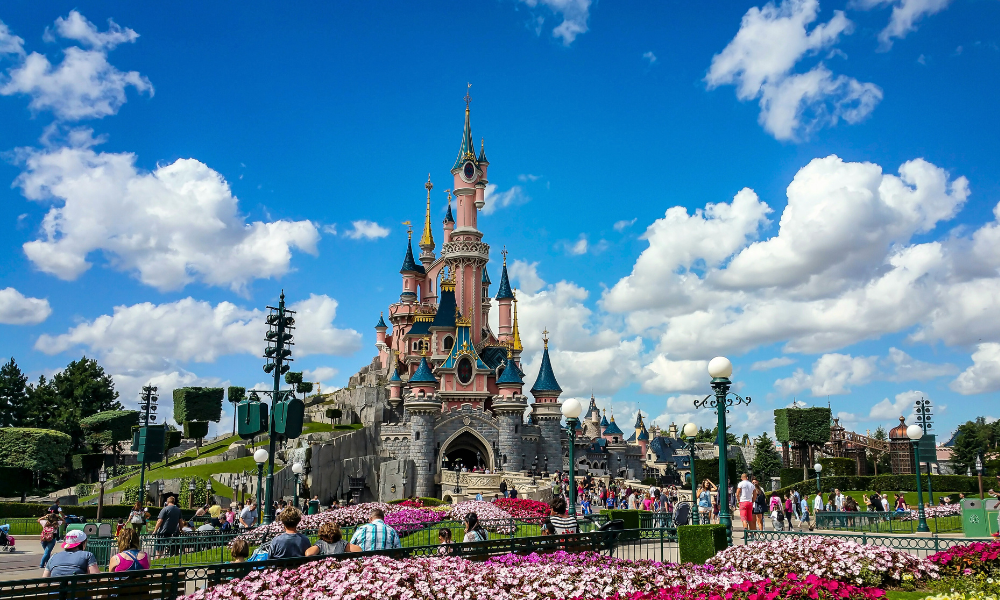
Located just 32 km east of Paris, Disneyland Paris delights children and adults alike, blending fun, fantasy, and the timeless magic of stories that shaped generations. More than a theme park, it’s a magical universe, where every detail, attraction, and character encounter is designed to transport you into a world of dreams.
Disneyland Paris is made up of two main parks: Disneyland Park, inspired by the original classic Disney park and Walt Disney Studios Park, dedicated to cinema and animation, offering behind-the-scenes experiences of films and animated worlds. Simply unforgettable.
- Live a magical day at Disneyland Paris — book your 1-day ticket here.
- Extend the magic — book your 2-day (or more) ticket to Disneyland Paris here.
How to get to Disneyland Paris
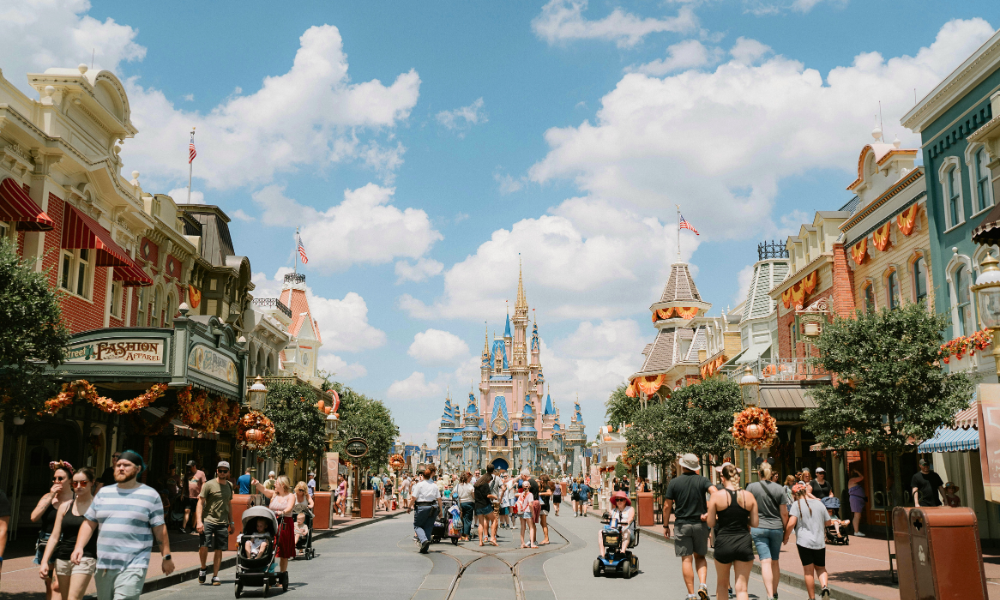
The easiest way is by RER A:
- Depart from stations such as Châtelet–Les Halles, Gare de Lyon, or Nation → Marne-la-Vallée / Chessy (40–45 minutes).
- From the station to the park entrance: just a 5-minute walk.
- Frequency: trains approximately every 15 minutes.
Other options include tourist buses, private transfers, or car rentals, depending on your departure point and group size.
> Buy tickets in advance, especially during holidays and weekends.
> Arrive early to enjoy the most popular attractions with shorter lines.
> Wear comfortable shoes — the parks are large, and walking is constant.
> Plan your day ahead, splitting time between the two parks and prioritizing key attractions.
> Don’t miss the parades and shows — these moments turn the visit into an unforgettable memory.
> Disneyland Paris App: perfect for checking show times, maps, and live queue updates.
Practical travel tips for Paris
Before you set off to explore Paris, a few practical tips can make your experience smoother, lighter, and far more enjoyable.
- Buy attraction tickets in advance: Paris is one of the most visited cities in the world, and lines can be long. Booking ahead saves time and stress.
- Walk as much as possible: Paris is meant to be discovered on foot. Every street, corner, and square hides quiet surprises.
- Pause at cafés without rushing: Sitting down to watch Parisian life with a coffee or croissant isn’t wasted time — it’s part of the experience.
- Use public transportation: For longer distances, the metro and RER trains are efficient and connect every corner of the city.
- Travel insurance is essential: If you’re not an EU citizen, travel insurance is key to a worry-free stay in France.
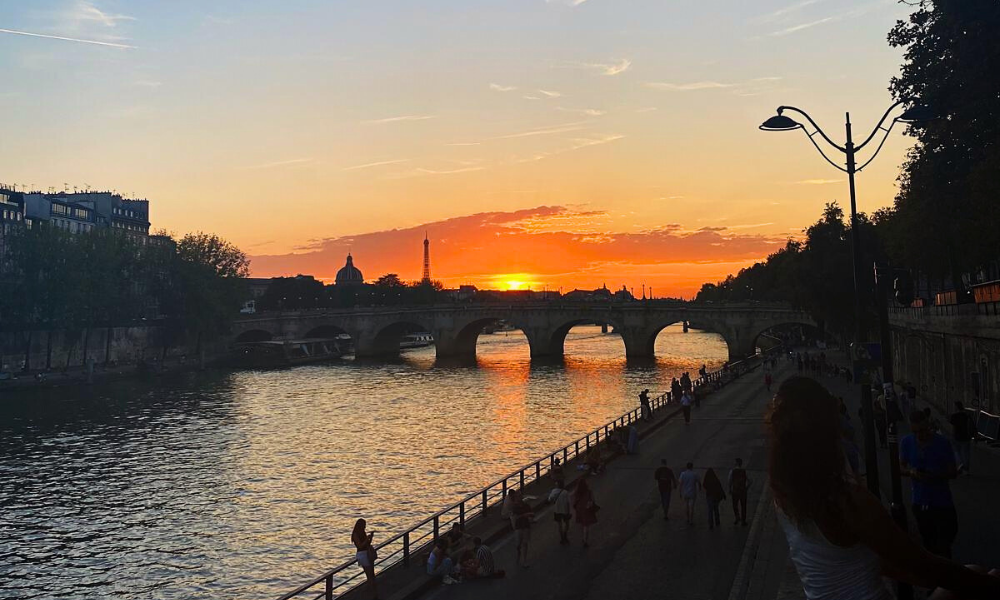
Paris is a city that writes to us even before we arrive. In five days, you read the opening chapters — and feel the urge to keep going. If your time is short, choose the places that inspire you most. I promise it will still be an unforgettable experience.
The City of Light always holds new pages, new aromas, new revelations and surprises. And when you return, it will be there — ready to shine once more.
Write your own letter to Paris and share your dreams, stories, and memories in the comments.
Plan Your Trip
For tours, activities, airport transfers, and skip-the-line tickets, we rely on GetYourGuide — a platform we’ve personally used and trust.
We use and recommend Omio.com to book trains, buses, and flights across Europe. It’s a reliable platform that makes comparing routes easy and helps you travel smoothly between cities.
If you’re planning a trip around Europe, you might be interested in these articles:

Discover the Magic of London: 10 Must-Visit Places for Harry Potter Fans
14 Must-Visit Beatles Spots in London + Liverpool: A Musical and Historical Journey
4 Days in London: The Ultimate Itinerary & Travel Guide
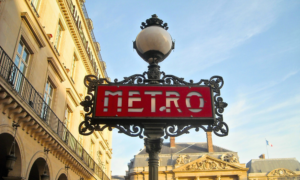
How to Use the Paris Metro: A Complete Guide to Tickets, Passes, and Stations